
Table of Contents
The One-Sentence Answer
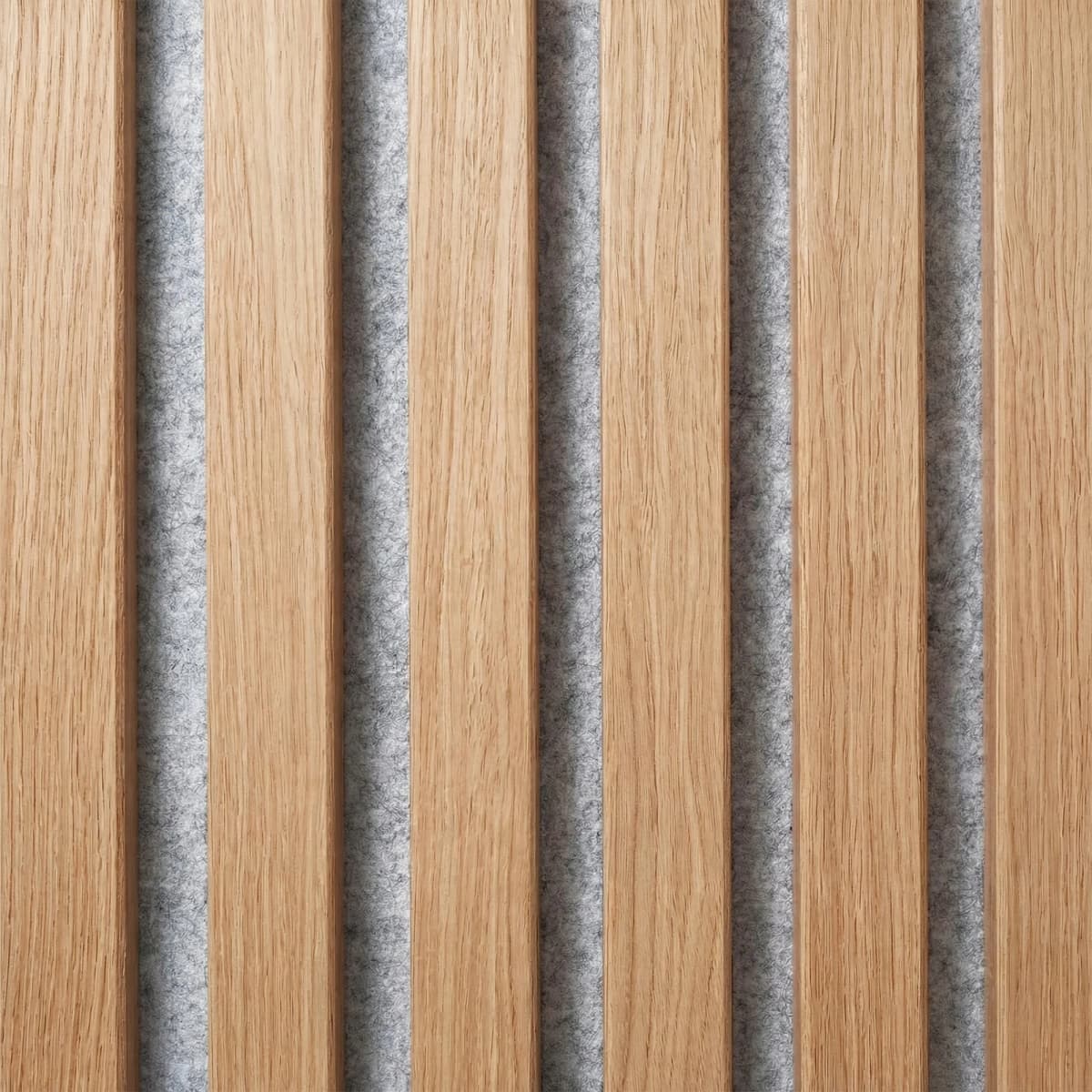
Acoustic slat wall panels are decorative wall panels made from real wood veneer slats mounted on a sound-absorbing felt backing, designed to add visual warmth to a room while simultaneously reducing echo and reverberation.
That’s the short version. Here’s everything else worth knowing.
What They’re Made Of
A quality acoustic slat panel has three components:
- Real wood veneer slats — thin strips of genuine timber (walnut, oak, ash) bonded to an MDF substrate. Not plastic. Not laminate. Real wood grain that looks, feels, and ages like the species it comes from.
- Acoustic felt backing — a layer of dense, engineered felt (such as AcuFelt™) bonded to the back of the panel. This is the component responsible for sound absorption. Without it, you just have a decorative slat panel.
- MDF or engineered wood core — the structural layer that keeps the panel flat, rigid, and dimensionally stable during installation.
How They Work
Sound travels as waves. When those waves hit a hard, flat surface — painted drywall, glass, concrete — they bounce back into the room and pile up, creating echo, flutter echo, and a general sense of acoustic “loudness” even in a quiet space.
Acoustic slat panels interrupt this cycle. The felt backing absorbs a significant proportion of the sound waves that would otherwise reflect — typically between 65% and 85% of mid-to-high frequency sound. The slat profile itself also diffracts sound waves, breaking up direct reflections.
The result is a room that sounds measurably quieter and more comfortable — without any structural modification.
For a deeper look at the science behind sound absorption and NRC ratings, read our guide on how soundproof wall panels actually work.
What Rooms Are They Used In?
- Living rooms — reduce echo from hard floors and high ceilings; improve TV and music quality
- Home offices — reduce voice echo on video calls; improve concentration
- Bedrooms — create a quieter, more restful acoustic environment
- Home theatres — tighten bass, reduce flutter echo, improve sound staging
- Restaurants and commercial spaces — manage ambient noise at scale
How Are They Installed?
Most acoustic slat panel systems are designed for DIY installation using construction adhesive. The process involves applying adhesive to the back of the panel, pressing it to a clean, dry wall, and checking level with a spirit level. A standard feature wall takes under two hours for most homeowners.
See our full guide to wall panel installation for a step-by-step walkthrough.
What Do They Cost?
Quality acoustic slat panels from factory-direct brands typically range from $109 to $259 per panel, with coverage of approximately 4–6 square feet per panel depending on size. Factory-direct purchasing eliminates retail markup, making premium panels accessible at 50–75% below traditional retail pricing.
Are They the Same as Regular Decorative Slat Panels?
No — and this is an important distinction. Decorative slat panels use the same visual profile (vertical wood slats) but have no acoustic felt backing. They look identical but perform completely differently. If acoustic performance matters — and it almost always does in living spaces — always verify the NRC rating before purchasing.
For a broader overview of everything the wood panel wall category covers, including acoustic and decorative types, that guide has all the detail you need.
Room Applications in Detail
Acoustic slat wall panels work in any room that has hard surfaces — but some rooms benefit more than others. Here’s how the application changes by room type.
Home office: The strongest use case. Hard walls, minimal soft furnishings, and the specific problem of echo on video calls make the home office the room where acoustic slat panels deliver the most noticeable improvement. One treatment wall — the wall your camera faces — is usually sufficient. The visual benefit is also significant: a walnut or charcoal slat panel wall creates a professional-looking backdrop for calls without requiring any additional staging.
Living room: Open-plan living rooms with hard floors and large windows are consistently reverberant. A slat panel feature wall on the longest bare wall addresses the primary reflection surface and creates the room’s visual centrepiece simultaneously. In living rooms, the design function of the panel is as important as the acoustic function — the panels need to look as good as they perform.
Home theatre: The acoustic requirement is higher in a dedicated home theatre — you’re managing not just echo but the way the room interacts with a multi-channel sound system. Full-perimeter acoustic treatment at 40–55% coverage is typical for serious home cinema builds. Acoustic slat panels work well here because they provide the necessary absorption without the clinical aesthetic of fabric-wrapped foam.
Bedroom: Bedrooms benefit from acoustic treatment primarily through improved sleep quality — softer acoustics reduce the perception of background noise. A feature wall behind the bed head is the natural installation zone. The choice of finish (warm walnut or lighter oak) has a significant impact on the overall bedroom aesthetic, so sample testing before ordering is particularly important.
Podcast and recording studio: The highest-performance application. Acoustic slat panels are increasingly preferred over acoustic foam in home studios because they provide comparable NRC performance with a finish that looks professional on camera. The combination of sound absorption and visual quality is unique to wood slat panels — no other product category delivers both.
Frequently Asked Questions
- What are acoustic slat wall panels made of?
- Acoustic slat wall panels consist of three layers: a real hardwood veneer or paint-grade MDF face in a slat profile, an engineered timber core (usually MDF or plywood), and a high-density acoustic felt backing. The veneer provides the visual finish; the core provides dimensional stability; the acoustic felt does the actual sound absorption.
- Are acoustic slat wall panels the same as decorative wood wall panels?
- No. Decorative wood wall panels are designed to look good; they have no acoustic specification. Acoustic slat wall panels have a certified NRC rating from a third-party lab test, which means their sound absorption performance has been independently verified. The key differentiator is the backing material — high-density acoustic felt vs no functional backing at all.
- How much do acoustic slat wall panels cost?
- Quality acoustic slat panels with real hardwood veneer and high-density felt backing typically range from £80–£180 per sqm depending on species, panel dimensions, and supplier. Budget panels with laminate print faces and thin or absent backing start at £30–£60 per sqm but deliver decorative performance, not acoustic performance.
- How long does it take to install acoustic slat wall panels?
- A standard feature wall (10–15 sqm) takes 3–6 hours for a competent DIY installer. The main time investment is surface preparation and layout planning. The panel fixing itself (adhesive application and placement) is faster than most people expect. No specialist tools are required.
- Do acoustic slat wall panels need to cover the whole wall?
- No. Partial coverage — 25–40% of total wall area — delivers clear acoustic results in most rooms. A single feature wall covering one side of the room achieves 70–80% of the acoustic benefit of full-room treatment, with a lower cost and a cleaner visual result (one intentional statement rather than all four walls treated).
Conclusion
Acoustic slat wall panels are one of the few interior design upgrades that deliver two distinct benefits in a single product: a premium aesthetic and genuine acoustic improvement. For anyone looking to upgrade a living room, bedroom, or home office, they represent the highest impact-to-effort ratio available in wall treatments today.
See Acoustic Slat Panels in Action
Browse the SoundPanel™ acoustic slat range at The Panel Hub — the most popular acoustic slat wall panel system for residential use — alongside the complete wood wall panel collection. For 50+ real-room applications showing how acoustic slat panels look across every style and room type, our interior slat wall ideas guide is the most comprehensive visual reference available. The acoustic panel buyer’s guide goes further on specifications — NRC ratings, backing system comparisons, and coverage calculations — for anyone ready to go beyond the basics covered here.