
Table of Contents
- Why Faux Stone Panels Work So Well Around Fireplaces
- Planning Your Fireplace Stone Panel Installation
- Heat Considerations
- Step-by-Step: Installing Faux Stone Panels Around a Fireplace
- Styling the Finished Fireplace
- Fireplace Stone Panel Styling: Making the Most of the Surround
- FAQs: Faux Stone Panels for Fireplace
- Browse RockSurface® Fireplace Stone Panels
Why Faux Stone Panels Work So Well Around Fireplaces
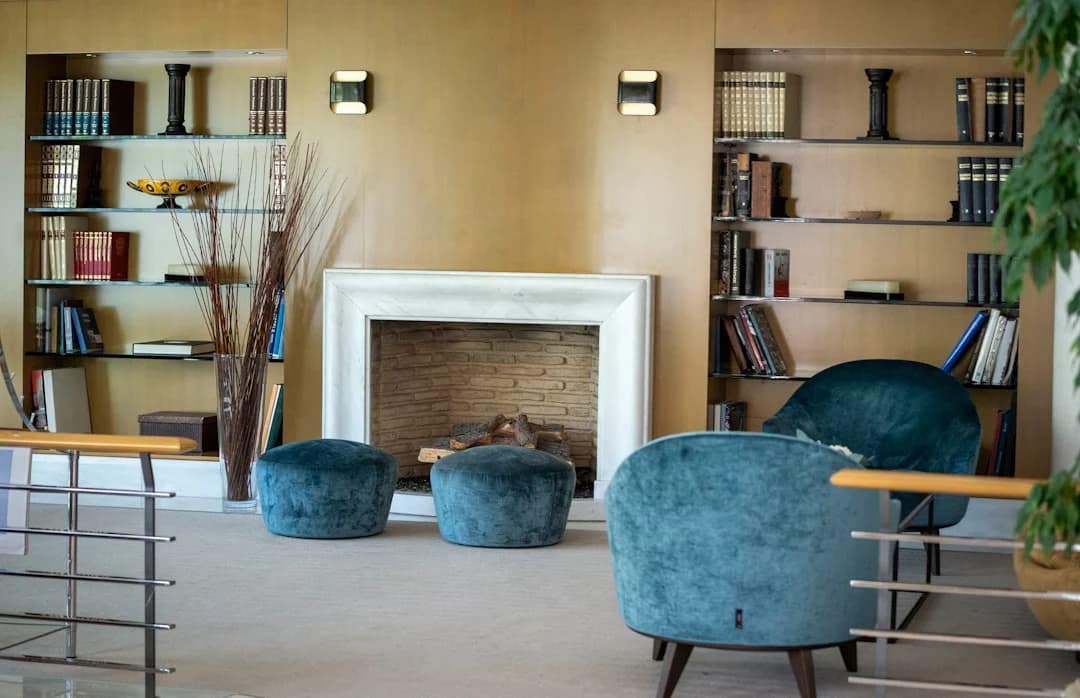
Stone and fire have been paired for centuries — in architecture, in design, and in the way a room feels. A stone fireplace surround signals permanence, quality, and a connection to natural materials that few other design choices can match. The problem is that real stone fireplace surrounds are expensive, heavy, and require structural assessment and specialist installation.
Faux stone wall panels solve this problem directly. Panels like our RockSurface® faux stone collection are designed to replicate the dimensional texture and visual depth of real stone — at a fraction of the weight and without the need for structural support, skilled stonemasonry, or significant disruption to the room. A fireplace stone surround that would cost thousands using real stone is achievable in a weekend using faux stone panels.
Planning Your Fireplace Stone Panel Installation
Define the Coverage Area
Before ordering panels, decide exactly which surfaces you want to cover. The most common options are:
- Chimney breast only: The wall section containing the fireplace, from floor to ceiling or from mantel to ceiling. This creates a strong vertical stone element that frames the fireplace without extending across the full room.
- Chimney breast and alcoves: Extending stone panels into the recessed alcoves on either side of the chimney breast creates a wider architectural composition that gives the fireplace wall a unified, designed quality.
- Fireplace surround only: Panelling the section of wall immediately around the fireplace opening — below the mantelshelf and to either side of the opening — is a more focused treatment that suits rooms where a full chimney breast is not present.
Measure Accurately
Measure the height and width of each surface to be covered. Add 10–15% to your total square footage for cuts, offcuts, and pattern matching. Calculate the total area and use our panel quantity calculator guide to confirm the number of panels required before ordering.
Choose the Right Stone Profile
Different stone profiles suit different fireplace and room styles:
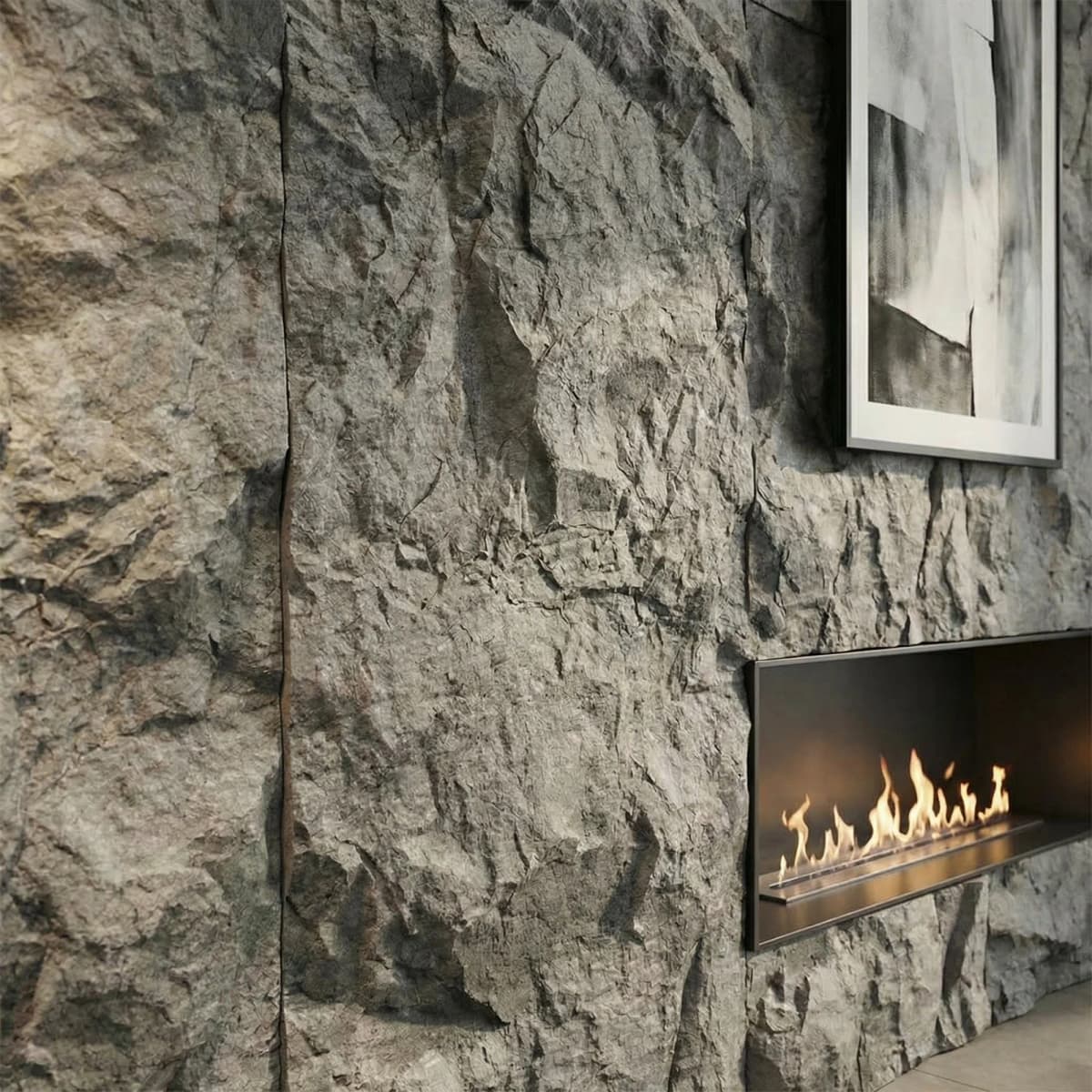
- Highland Rock: Irregular, organic field stone texture. Best suited to rustic, farmhouse, and country interiors. The randomness of the surface pattern reads as authentically natural.
- Ridge Rock: Horizontal layered stone with a more structured, linear profile. Best suited to contemporary, industrial, and transitional interiors where a composed stone look is preferred over a raw, organic one.
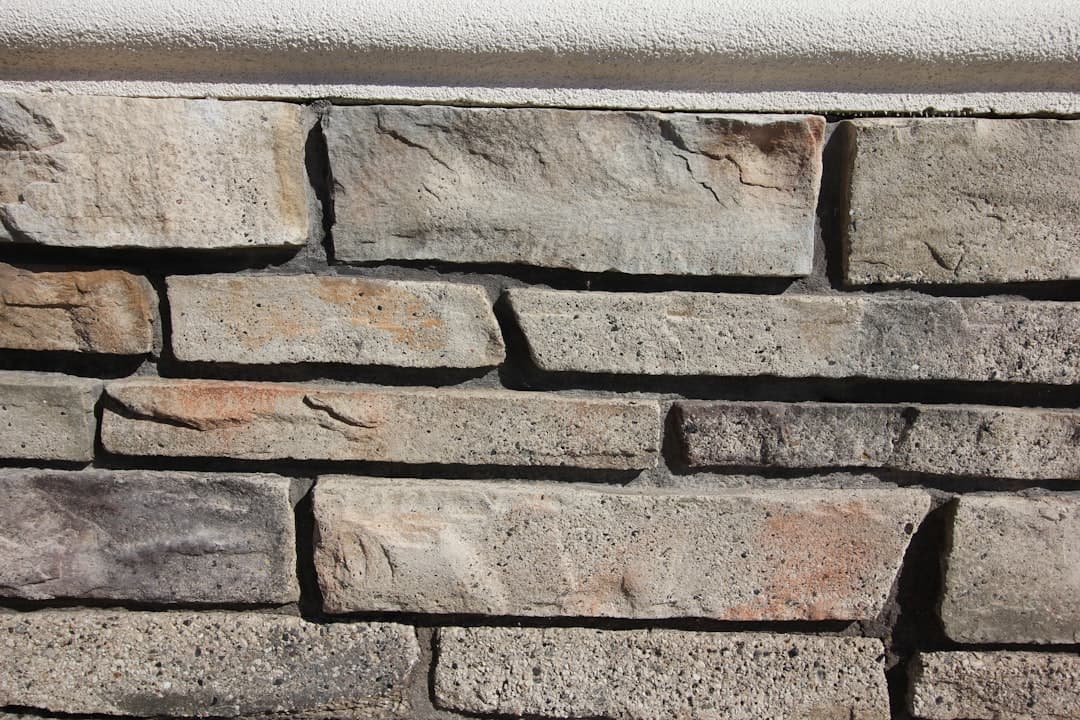
- Stone Rock: Ashlar-style panels with consistent face dimensions and clean joints. Suits formal, traditional, and high-end contemporary interiors.
Heat Considerations
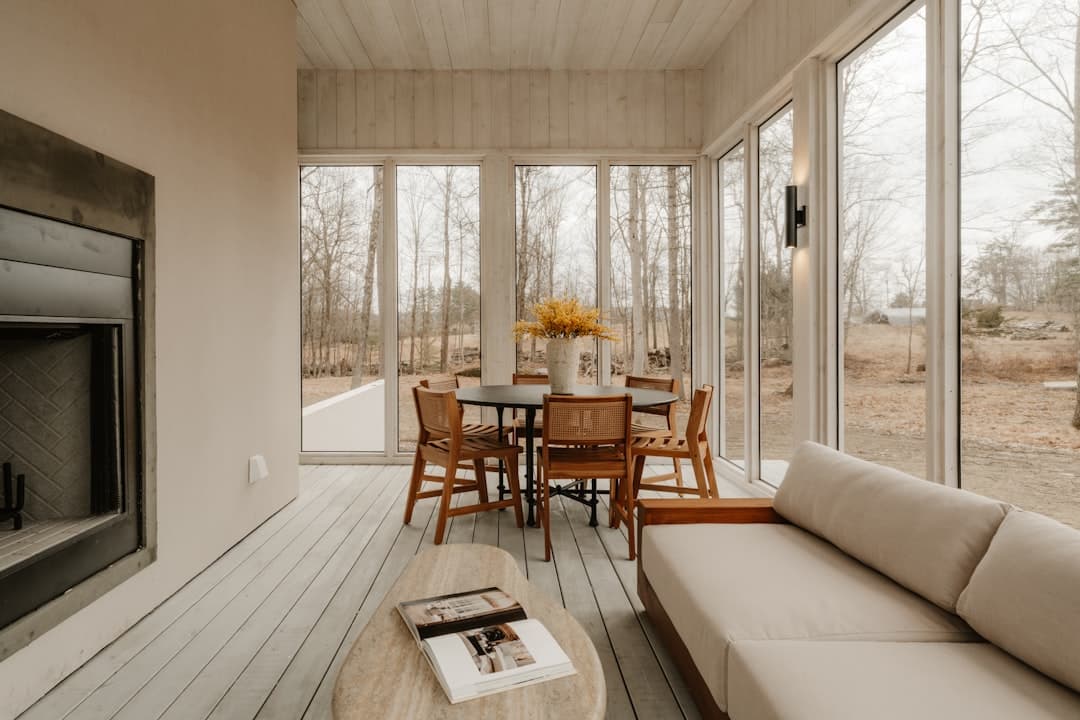
Faux stone panels for fireplace applications must be installed on the wall surfaces adjacent to and above the fireplace — not in the firebox opening or directly inside a live flue. The panels are designed for wall surfaces at ambient room temperatures. Keep a minimum clearance of 300mm from any open flame or high-heat surface. For gas fireplace surrounds, check the manufacturer’s heat emission specifications to confirm appropriate clearance distances. RockSurface® panels are not rated for direct heat exposure and should not be used as firebox linings or hearth surfaces.
Step-by-Step: Installing Faux Stone Panels Around a Fireplace
Step 1: Prepare the Wall Surface
The wall behind the panels must be clean, dry, and structurally sound. Remove any loose paint, wallpaper, or existing decorative treatments. If the wall surface is uneven — common on older properties with plastered chimney breasts — use a skim coat or self-levelling compound to create a consistent surface. Our uneven wall installation guide covers preparation in detail.
Step 2: Mark Your Reference Lines
Use a spirit level to mark a precise vertical reference line on the wall from which to start your first panel. Starting plumb (perfectly vertical) is critical — any deviation will compound across subsequent panels. On a chimney breast, start from the centre of the wall and work outward to ensure the pattern is symmetrical on both sides of the fireplace opening.
Step 3: Cut Panels to Size
Measure and mark cuts for panels that need to fit around the fireplace opening, mantelshelf, or room corners. Faux stone panels cut cleanly with a standard handsaw, jigsaw, or circular saw with a fine-tooth blade. Cut on the face side to minimise chipping on the visible surface.
Step 4: Apply Adhesive and Fix Panels
Apply a bead of construction adhesive (MS polymer or polyurethane-based) to the back of the panel. Press firmly against the wall and use finishing nails at panel edges for additional mechanical fixing while the adhesive cures. Work from the bottom of the wall upward, ensuring each row is level before proceeding. Full installation instructions are covered in our faux stone panel installation guide.
Step 5: Finish the Edges and Joints
At external corners (room corners, fireplace opening edges), use corner mouldings or mitre the panels for a clean finish. Fill any remaining gaps at wall edges with a colour-matched sealant. Remove adhesive residue from panel faces with a damp cloth before it cures fully.
Styling the Finished Fireplace
Once the panels are installed and the adhesive has cured (typically 24 hours for full bond strength), style the fireplace surround to complement the stone texture:
- A raw wood mantelshelf pairs well with organic stone profiles like Highland Rock
- A painted or plastered mantelshelf suits the cleaner Ridge Rock and Stone Rock profiles
- Recessed downlights positioned above the chimney breast will rake light across the stone surface, emphasising texture and depth
- Flanking the fireplace with GroovePanel® geometric wood panels in the alcoves creates a strong material contrast — stone and solid wood — that anchors the fireplace wall as the room’s main focal point
Fireplace Stone Panel Styling: Making the Most of the Surround
Once the faux stone panels are installed around the fireplace, the styling decisions — lighting, accessories, and surrounding furniture — determine whether the fireplace reads as a considered centrepiece or a surface treatment that was simply applied.
Upward lighting: Recessed uplighting at the base of the panel run, or adjustable spots from the ceiling aimed at the stone surface, creates raking light that emphasises the three-dimensional texture of the profile. This effect is most dramatic in rooms where other light sources are dimmed. If a new circuit isn’t practical, plug-in up-lighters placed at floor level against the chimney breast achieve a similar effect.
Mantelpiece treatment: A timber mantelpiece shelf above the fire opening works exceptionally well against a stone-panelled chimney breast — the contrast between warm wood grain and stone texture is a classic material pairing. For a more contemporary result, a steel or concrete shelf floated directly on the stone surface without visible supports creates a minimal aesthetic.
Proportioning the stone coverage: The stone surround doesn’t have to cover the entire chimney breast wall. Two common treatments: full floor-to-ceiling coverage on the entire chimney breast; or a partial coverage that borders just the fire opening — typically 500–600mm to each side and above. The partial treatment uses less material and keeps the stone as a focused detail rather than a dominant surface.
Colour and adjacent walls: Dark-toned stone profiles (charcoal, deep grey, earth tones) against white or pale neutral walls create the strongest contrast. Lighter stone profiles — cream or beige tones — work better against warmer mid-tone walls. The stone and adjacent wall colours should share at least one tonal quality (both warm, or both cool) to read as part of the same design intention.
FAQs: Faux Stone Panels for Fireplace
Can faux stone panels go directly next to an open fire?
Faux stone panels should not be installed closer than 300mm to the edge of an open fire opening, and never within the firebox itself. The panels are not rated for direct heat exposure. For gas and electric fires with enclosed fronts and rated clearance distances, the manufacturer’s specification will state the minimum distance from the heat source. Always follow the fireplace manufacturer’s guidelines — not just the panel manufacturer’s.
What adhesive should I use to fix faux stone panels near a fireplace?
Standard construction adhesive is appropriate for faux stone panel installation on the areas of the chimney breast that are at safe distances from the fire opening. For any section within the heat exclusion zone (which should be left unfaced or tiled), a heat-resistant adhesive is required. The junction between the stone panels and any heat-rated tile surface should be sealed with a heat-resistant silicone.
Can I tile the firebox surround and use faux stone panels for the chimney breast?
Yes — this is a common and practical approach. The firebox surround and hearth are typically finished in a heat-rated tile or natural stone (which handles direct heat), while the chimney breast above and to the sides uses faux stone panels for the aesthetic effect at a fraction of the cost. The two materials can sit adjacent to each other when the junction is cleanly detailed.
Will faux stone panels crack near a fireplace due to heat expansion?
At safe installation distances from the fire, the ambient temperature rise is insufficient to cause thermal expansion issues in polyurethane panels. PU panels have a higher coefficient of thermal expansion than timber but lower than thin stone tiles — in normal fireplace proximity conditions, cracking is not a practical concern.
Browse RockSurface® Fireplace Stone Panels
The RockSurface® collection at The Panel Hub includes Highland Rock, Ridge Rock, and Stone Rock profiles. All panels are lightweight, DIY-compatible, and backed by a 5-year warranty, 60-day returns, and 24/7 support. Order a sample to compare profiles and confirm your choice before purchasing for the full installation.