
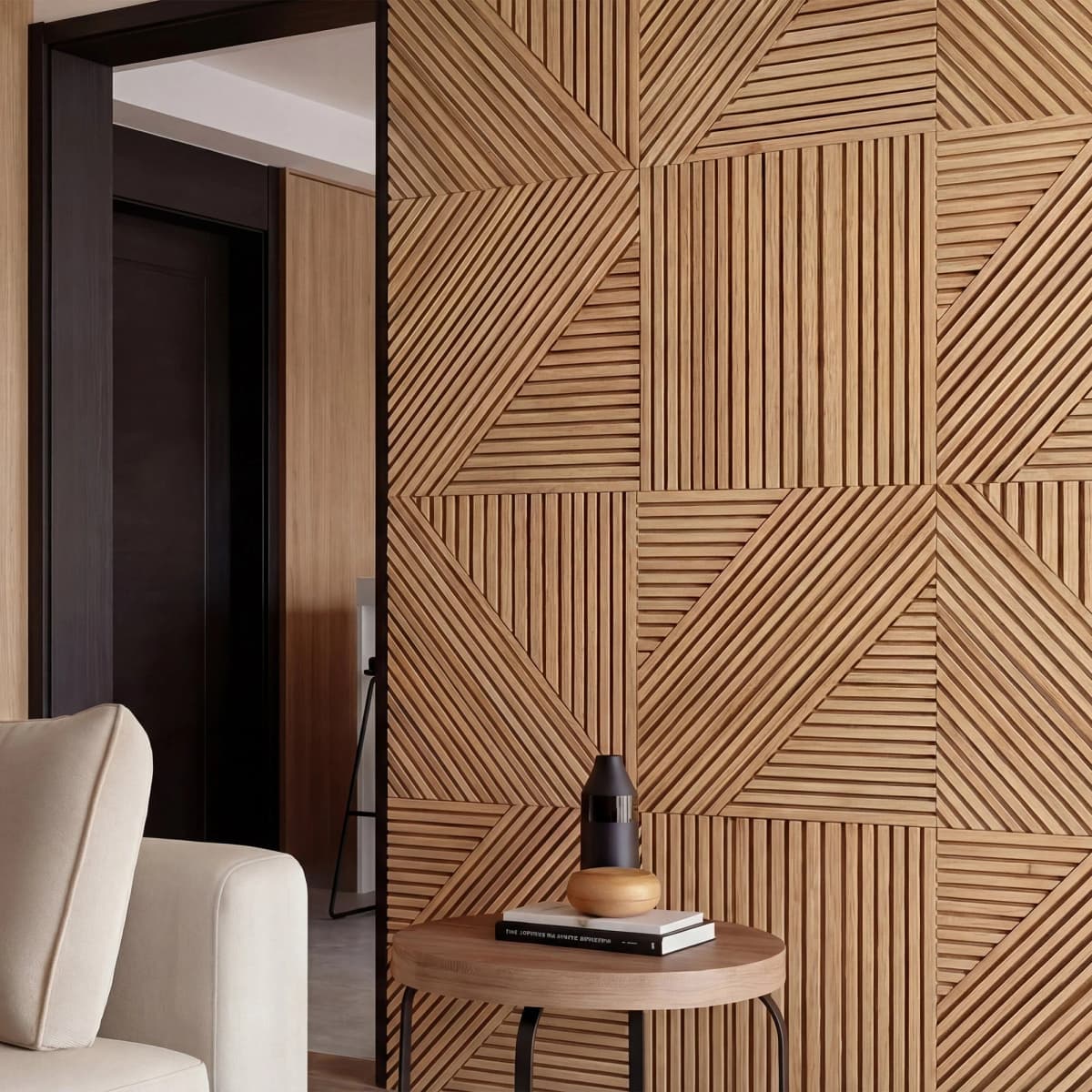
Children’s rooms present a specific interior design challenge. The brief is usually something like: stimulating, cheerful, safe, durable, and ideally not something you’ll desperately want to rip out in three years. Geometric wood wall panels navigate this unusually well — they’re bold enough to define a space, natural enough to age gracefully, and made from materials that meet the safety standards relevant for rooms where children sleep and play.
Here’s how to use geometric panels in a nursery or children’s bedroom effectively.
Table of Contents
Material Safety: What Matters in a Children’s Room
In a room where a child spends eight to twelve hours a day, the materials on the walls are worth scrutinising. Key concerns are:
VOC emissions
Volatile organic compounds (VOCs) off-gas from many building materials — adhesives, paints, laminates, and engineered wood products with formaldehyde-based binders. In a child’s bedroom where ventilation is often limited, low-VOC materials matter.
All panels in the GroovePanel® solid wood panels are made from 100% solid timber with no MDF or HDF binders. Solid wood has significantly lower inherent VOC emissions than composite panel products. The panels also carry Environmental Product Declaration (EPD) verification, which includes indoor air quality data — giving parents documented evidence of what they’re putting on their child’s wall rather than just marketing claims.
Physical robustness
Children’s rooms are harder on surfaces than adult rooms. Solid wood panels withstand bumps and contact significantly better than veneer panels or painted surfaces. Minor surface damage in solid wood can often be sanded and refinished; the same damage in a veneer panel is permanent.
Certifications
FSC certification verifies that the timber was sourced from responsibly managed forests — relevant for parents who want the environmental credentials of the materials in their child’s room to be verified. For more detail on what FSC certification means, see our guide to FSC certified wood and why it matters.
Geometric Patterns for Children’s Rooms
The appeal of geometric patterns for children’s rooms goes beyond aesthetics. There’s genuine educational value in an environment that presents mathematical shapes and spatial relationships as a natural part of daily life.
Triangle mosaics — dynamic and stimulating
Triangle patterns are excellent for older children’s rooms and teenagers’ bedrooms where the brief shifts from gentle and soothing to bold and expressive. The directional energy of the Walnut Triangle Panel suits a room that’s meant to feel active and interesting.
Concentric squares — best for nurseries
For babies and very young children, the 3D Concentric Square Panel offers an interesting visual environment without being overwhelming. Research suggests concentric pattern shapes are among those that catch infant attention — the nesting structure is instinctively engaging for developing visual systems.
Honey mosaic — warmest and most organic
The Honey Mosaic Panel is the most tactile and naturalistic option — appropriate for rooms designed around a biophilic, nature-connecting aesthetic. It works well in rooms where you’re pairing the panel with natural textiles, rattan furniture, and botanical prints.
Colour Considerations
Walnut’s natural dark tone can make a small nursery feel heavy if used on all four walls. Options for lighter-toned rooms:
- Use geometric panels on one wall only (the feature wall behind the cot or bed), keep remaining walls in a light, warm paint
- Choose the natural, unfinished finish of lighter wood species if available
- Pair dark walnut panels with very pale walls — the contrast actually reads as energetic and modern rather than heavy
Installation Safety
Ensure panels are fully secured to the wall — not just adhesive-bonded but mechanically fixed if they are large enough to pose a risk if they detach. Use the appropriate wall anchor for your wall construction (plasterboard fixings for stud walls, masonry plugs for solid walls). For mosaic tiles under 300mm square, adhesive alone is typically sufficient if applied correctly to a properly prepared surface.
For installation guidance, see our article on wood wall panel installation tools and our guide to wood accent walls for nurseries and safe materials.
Get Started
Browse the full FSC-certified, EPD-verified range at GroovePanel® Geometric Wood Wall Panels. Order a sample to assess timber tone in your child’s room lighting before committing.