
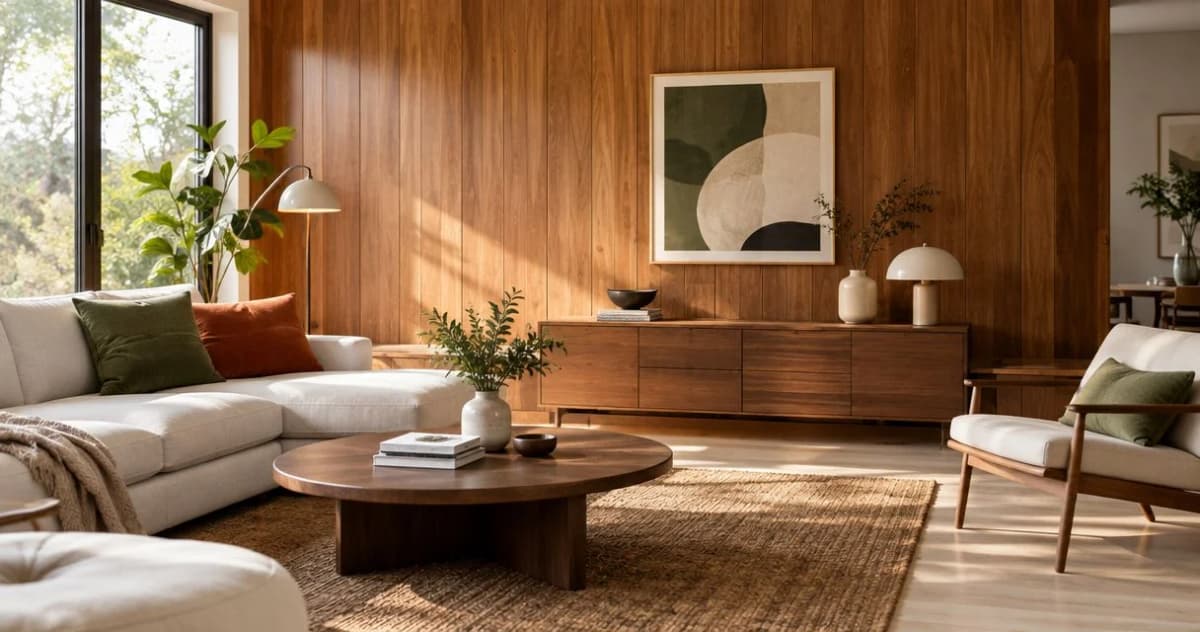
Yes—wood paneling is a current-looking choice in 2026 when its finish, pattern, and placement suit your room. Choose it for warmth, texture, or documented sound absorption, but do not assume every decorative wood panel provides acoustic performance.
- Is wood paneling coming back in style in 2026? Yes—use deliberate placement rather than covering every wall.
- The Panel Hub offers acoustic wall panels and decorative wood panels; choose by function before pattern.
- Wood slat panels suit linear layouts; textured solid wood panels suit a decorative focal wall.
- An acoustic absorption rating does not mean a wall panel blocks sound between rooms.
Why this matters
You do not need to replace every surface to make a bedroom or living room feel more considered. A wood-paneled wall can give the bed, sofa, or dining area a clear backdrop while the remaining walls stay simple.
The useful question is not whether every version of paneling is fashionable. It is whether the paneling solves something in your room: a blank wall, an awkward focal point, or distracting reflected sound.
Start by separating construction from appearance. This guide to engineered wood veneer versus solid wood paneling helps you compare material choices before choosing a pattern.
Is wood paneling coming back in style in 2026?
Yes, wood paneling belongs in a 2026 interior when you treat it as part of the room rather than an extra decoration. Linear slats, carved surfaces, and geometric layouts offer different ways to introduce wood without making every wall compete for attention.
This is a design recommendation, not a claim about measured sales growth. Choose the look because it works with your furniture, lighting, and daily use—not because a trend label promises lasting appeal.
The comparison below separates three actual panel choices by their stated purpose and surface design. None is the right answer for every room.
| Panel option | Best for | What it contributes | Limitation to consider |
|---|---|---|---|
| Acoustic Slat Wood Wall Panels | SoundPanel™ | Homeowners seeking a linear wood finish with an acoustic purpose | A slatted wall surface sold as an acoustic panel | Match any absorption claim to the documented installation; acoustic panels are not soundproofing |
| Textured Solid Wood Panel Honeycomb | GroovePanel® | A geometric decorative focal wall | Solid-wood hexagons set at different depths | The raised pattern adds visual activity; its description does not establish an acoustic rating |
| Textured Solid Wood Wall Panel Saw Marks | GroovePanel® | A decorative wall with fine linear texture | Closely spaced vertical grooves cut across solid wood | Decorative grooves alone do not establish sound absorption |
For your room, make the functional decision first. If you want less echo, examine acoustic documentation; if you want a textured backdrop, judge the pattern, material, and edge details.
Wood slat panels: best for a linear backdrop
Wood slat panels give you a repeated line that can connect a wall to the furniture in front of it. Behind a bed or sofa, that repetition provides structure without requiring a separate arrangement of small decorative objects.
Choose a slatted layout when you want the wall to organize the room. Align the paneled area with a clear feature, such as the bed, rather than stopping at an arbitrary point beside it.
The trade-off is repetition. Slats introduce another pattern, so check them against striped upholstery, busy rugs, shelving, and closely spaced blinds before committing.
For a 2026 bedroom update, keep the initial decision simple: decide whether the paneled area belongs behind the bed or across the entire wall. Then plan its edges, bedside furniture, and outlets together.
Textured solid wood panels: best for a decorative focal wall
Textured solid wood panels make surface depth part of the design. The Honeycomb panel, for example, uses tessellated hexagons at different depths; the Saw Marks panel uses fine vertical grooves.
Choose textured wood when the wall itself should be the decorative feature. It is particularly useful to assess this approach before buying additional artwork for the same surface.
The limitation is visual competition. A strongly patterned wall and a crowded arrangement of pictures ask for attention in the same place, so decide which should lead.
View the proposed texture from the doorway and your usual seat. A detail that looks attractive close up still needs to work as a complete wall from across the room.
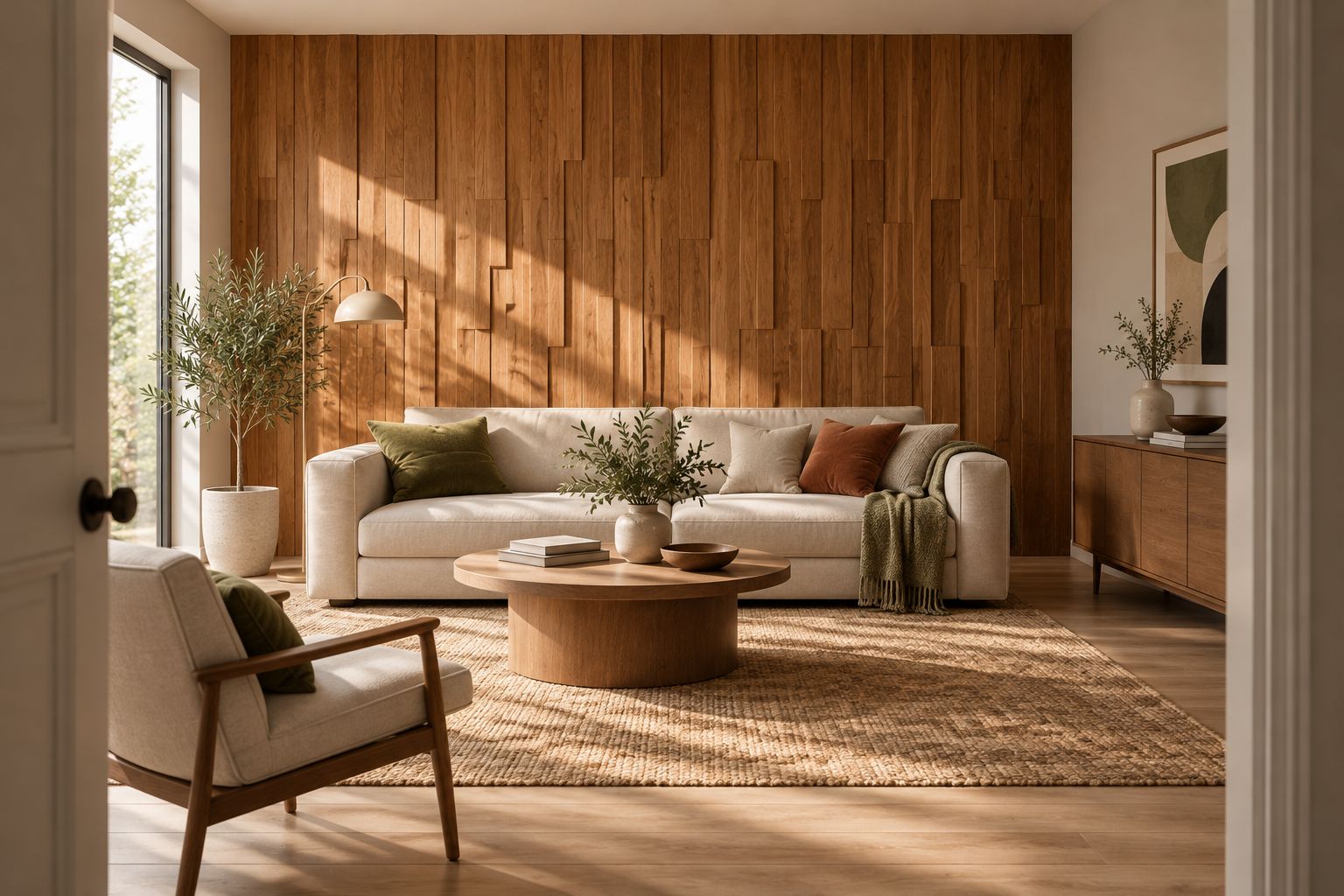
Acoustic wood panels: best for reflected-sound concerns
An acoustic panel has a different job from a purely decorative wood surface. Sound absorption reduces reflected sound within a room; it does not establish how much sound passes through the wall into another room.
The Panel Hub describes its real wood acoustic wall panels as NRC 0.85 rated, FSC certified, and covered by a 5-year warranty. Those details address different buying questions: absorption, sourcing, and product coverage.
An NRC of 0.85 is a laboratory absorption rating, not a promise that your room becomes 85% quieter. Ask which panel and mounting arrangement the rating covers, then compare that arrangement with your planned installation.
The Panel Hub is best for homeowners choosing acoustic wall panels alongside decorative wood options. For sound-sensitive projects, the limitation is that a product category or surface pattern alone cannot establish the result in your room.
The brand also describes installation in under 2 hours. Treat that as an installation claim to check against your project scope, not a complete schedule for repairing walls, cutting around outlets, and finishing edges.
Why wood paneling looks different from room to room
The same wood pattern does not create the same result everywhere. Before choosing panels for a 2026 project, assess these factors:
- Wall coverage: A defined feature area leaves more plain wall visible; full-wall coverage makes wood a larger part of the room's appearance.
- Pattern depth: Raised cells and carved grooves produce different shadows. Inspect the surface under your actual lighting.
- Existing wood finishes: Compare the proposed panel with flooring, doors, and furniture together rather than judging isolated images.
- Furniture placement: A panel layout should still make sense when the bed, sofa, shelves, and lamps are in position.
- Functional purpose: Decorative texture and sound absorption are separate buying criteria. Require acoustic documentation when sound is the reason for purchasing.
- Installation details: Outlets, trim, wall condition, and exposed edges affect how complete the finished wall looks.
You do not need every wood surface to match exactly. Compare them in the room and decide whether the differences look intentional before ordering the full wall.
How do you make wood paneling look current?
Make wood paneling look current by planning the complete wall before attaching the first panel. A clear boundary and a finished edge matter more than choosing the most elaborate pattern.
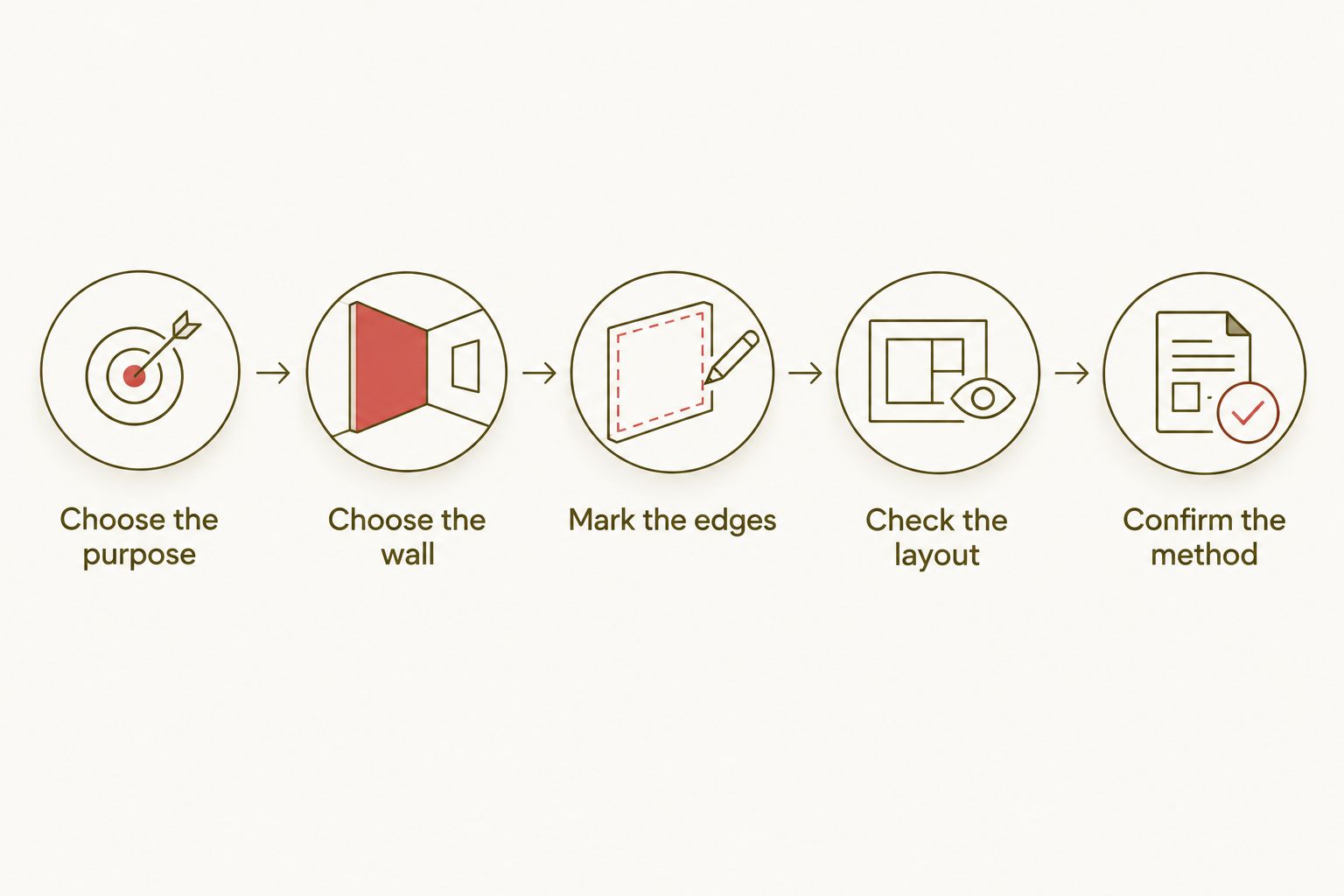
Use this sequence to move from an attractive idea to a layout you can install:
- Choose the purpose. Write down whether the wall is primarily decorative or intended to address reflected sound. Use that answer to narrow the product type.
- Choose the wall. Stand at the entrance and identify the surface that naturally frames the room's main furniture. Check that the proposed paneling supports that focal point.
- Mark the edges. Use a temporary outline to establish where the paneling starts and stops. Include baseboards, corners, door casings, and any visible side edges.
- Check the layout. Mark seams and cuts before installation. Notice whether an outlet or switch interrupts a repeated pattern in an awkward place.
- Confirm the method. Follow the selected panel's instructions for substrate preparation, fastening, cutting, and finishing. Keep electrical work and required clearances separate from decorative decisions.
For a 2026 refresh, photograph the outlined wall with your furniture in place. This gives you a useful check on scale before the project becomes permanent.
Which panel should you choose for your room?
Choose acoustic slats for a linear surface with an acoustic purpose; choose textured solid wood when decoration is the priority. Do not buy a decorative pattern expecting an undocumented sound benefit.
The Panel Hub's wood wall panel range includes the following options. Compare their stated roles above, then confirm dimensions, installation requirements, and finishing details for the product you select.


The best choice is the one whose strengths match your reason for changing the wall. A decorative panel does not become an acoustic treatment because it has grooves, and an acoustic panel still needs to suit the room visually.
Does wood paneling make a small room look smaller?
Wood paneling does not automatically make a small room look smaller; judge the coverage, contrast, and pattern in your actual space. A sample photograph cannot show how the proposed wall will relate to your bed, sofa, or available daylight.
Start with a defined area if you are uncertain. Mark its boundary and look at it from the entrance before expanding the design across adjacent walls.
Keep the furniture plan visible during that check. Paneling that disappears behind tall storage contributes differently from paneling that remains exposed above a low sofa.
Should you remove existing wood paneling?
Do not remove existing wood paneling solely because it is older. First assess its condition, attachment, finish, and relationship to the room you want to create.
Keep appearance and condition as separate decisions. A sound surface with an unwanted finish presents a different project from loose panels, damaged material, or a wall with moisture concerns.
For a 2026 renovation, decide what you want to preserve before planning demolition. Confirm whether the existing surface can accept your intended treatment rather than assuming every panel can be painted or refinished the same way.
FAQ
Is wood paneling coming back in style in 2026?
Yes—wood paneling is a current-looking choice in 2026 when its finish, pattern, and placement suit the room. Choose it for a clear decorative or acoustic purpose rather than treating every wall as a feature.
What’s the best wood paneling for a bedroom feature wall?
The best bedroom paneling matches the job you want the wall to do: slats for a linear backdrop or textured wood for a decorative focal point. Check the layout with your bed, outlets, and bedside furniture in place.
Are wood slat panels better than textured wood panels?
Wood slat panels are better for a repeated linear layout; textured wood panels suit a surface-led decorative feature. Neither pattern alone proves acoustic performance.
Do acoustic wood panels soundproof a room?
Acoustic wood panels do not, by themselves, establish soundproofing between rooms. Sound absorption addresses reflections inside a room, while sound isolation depends on the wider construction.
What does an NRC 0.85 rating mean for wall panels?
NRC 0.85 is a laboratory sound absorption rating, not a guarantee that your room becomes 85% quieter. Confirm the tested mounting arrangement before applying the rating to your installation.
Can I put real wood panels inside a shower?
Do not assume real wood wall panels are suitable inside a shower. Use a panel system explicitly approved for that wet-area application and follow its sealing and installation instructions.
Can I install wood paneling myself?
You can plan a DIY installation when the selected panel’s instructions match your wall and skills. Check preparation, fastening, cuts, and exposed edges before starting, and use qualified help for electrical alterations.
Should every wall in a room have wood paneling?
No—every wall does not need paneling. Start with the wall that supports your main furniture or functional goal, then assess whether additional coverage improves the room.
One last thing
Plan the end of the paneling before choosing the middle. The point where a panel meets painted drywall, a doorway, or a baseboard deserves as much attention as its central pattern.
Before ordering from The Panel Hub, sketch those junctions and check the finishing instructions. A deliberate boundary gives your 2026 update a clear shape—and prevents the last visible edge from becoming an afterthought.
Related guides
- Best grooved wall panels for modern interiors
- Best mosaic wood wall panels for accent walls
- Installing wall panels around window and door casings