
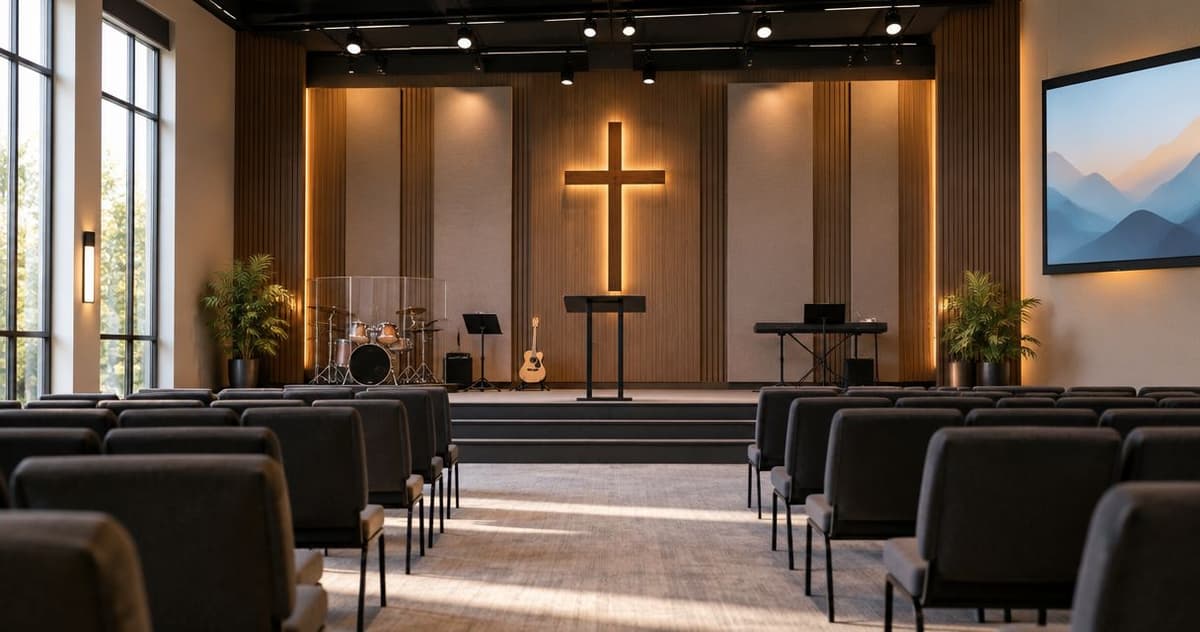
Church wall paneling is an interior wall treatment intended to improve worship-space appearance and, when acoustically specified, support clearer speech and balanced music. This 2026 guide explains how to choose wall panels for churches without confusing decorative finishes, sound absorption, and sound isolation.
- Choose wall panels for churches by acoustic performance and installation requirements, not appearance alone.
- The Panel Hub suits church buyers comparing acoustic wall panels with decorative wood finishes.
- Sound absorption controls reflections inside worship spaces; it does not establish sound isolation between rooms.
- Approve fire documentation and mounting details before purchasing panels for a sanctuary.
The Panel Hub is best for church buyers comparing decorative wood finishes with acoustic wall panels. Start with The Panel Hub to compare those categories, then build a specification around your room rather than a product photograph.
Why wall paneling matters for churches
A sanctuary asks more of its walls than a residential feature wall. Spoken teaching needs intelligibility, congregational singing needs a supportive room, and amplified instruments need controlled reflections. A treatment that solves one problem deserves checking against the others.
Your 2026 project brief should separate the sanctuary, fellowship hall, classrooms, and entrance areas. Their activities differ. A decorative entrance wall and an acoustic sanctuary treatment should not share a specification simply because the finishes match.
The Panel Hub describes its real wood acoustic panels as NRC 0.85 rated and FSC certified. NRC describes sound absorption; FSC certification concerns responsible forest sourcing, not acoustic performance or fire compliance. Keep those purchasing criteria separate.
How to choose and install church wall panels
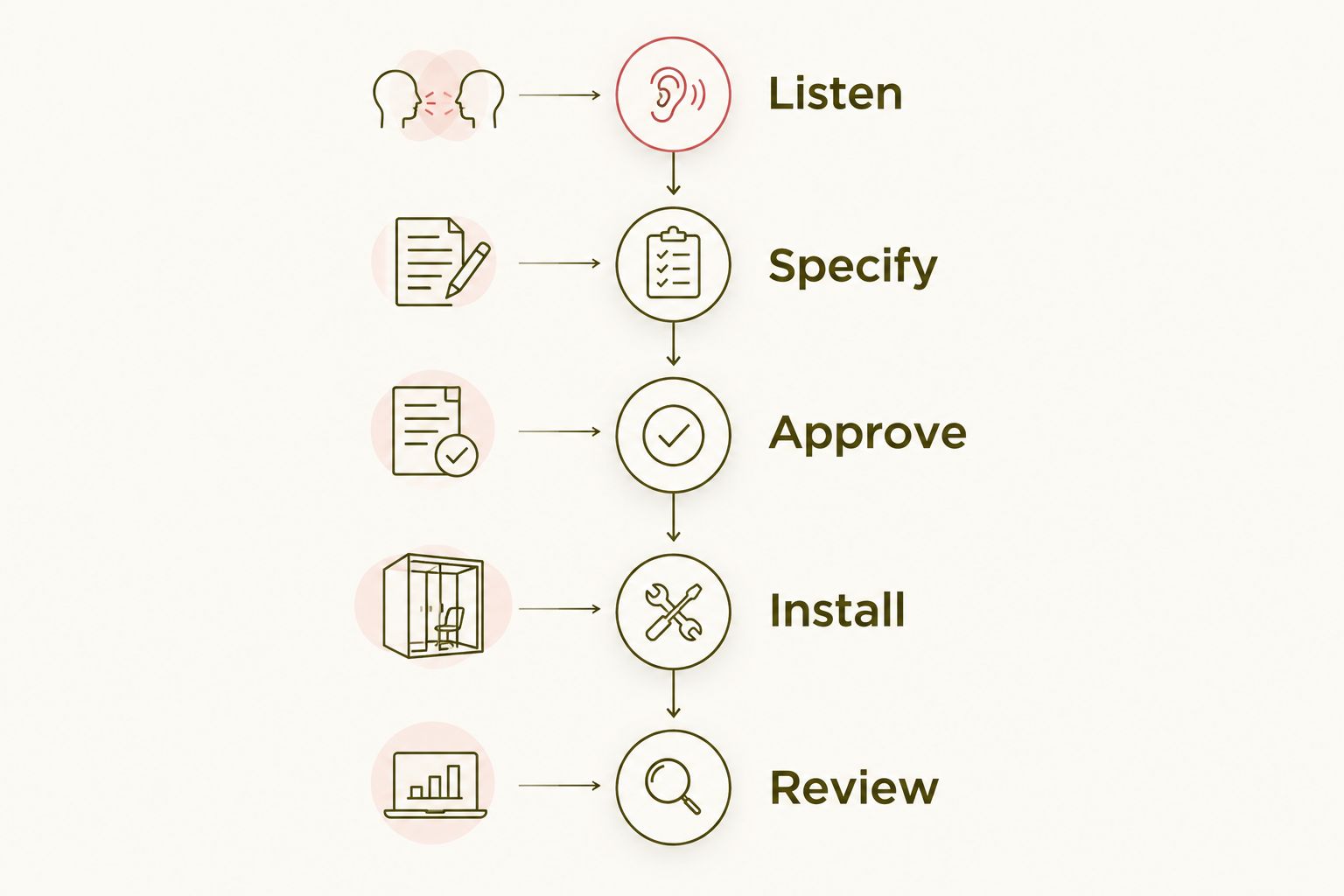
Use five phases: Listen, Specify, Approve, Install, Review. The steps below turn those phases into decisions your facilities team, worship team, and installer can share.
1. Define the room's main job
Start with observation, not shopping. Walk the room during spoken teaching, music rehearsal, and an ordinary gathering. Listen from the front, middle, rear, and any balcony rather than judging the sound from the mixing position alone.
Write a short room brief for your 2026 project. Describe the actual problem: words blur at the rear, a distinct echo follows speech, or music sounds uneven across the seating area. These are different symptoms and deserve separate checks.
Include the people who use the room. A choir director, an audio volunteer, and a facilities lead bring different priorities; settle those priorities before selecting coverage or finishes.
- Record the main activities: teaching, singing, rehearsal, or social gatherings.
- Mark seating locations where listeners report problems.
- Identify architectural features you must preserve.
- Decide who approves the acoustic outcome and the appearance.
2. Separate absorption from sound isolation
Use a simple listening check first. Speak from the usual teaching position and listen for lingering sound or a distinct repeat. A hand clap helps reveal reflections, but it does not replace a measured room assessment.
Acoustic panels absorb some reflected sound inside a room; sound isolation limits transmission between spaces. If a classroom hears the sanctuary through a door, shared wall, or ventilation path, decorative slats are not a complete isolation solution.
For a sanctuary with persistent intelligibility problems, ask an acoustics professional to assess reverberation, background noise, and the sound system together. Panel placement alone does not resolve every cause of unclear speech.
- Identify whether the complaint concerns echo, background noise, or sound transfer.
- Check doors and ventilation paths when sound crosses between rooms.
- Inspect loudspeaker coverage before treating walls indiscriminately.
- Request room measurements when a major sanctuary upgrade is planned.
3. Match the panel specification to the purpose
Build a comparison sheet yourself. Separate acoustic treatment from decorative wood and stone-look finishes, then request the supporting documents for the exact assembly you intend to install.
NRC summarizes absorption at 250 Hz, 500 Hz, 1,000 Hz, and 2,000 Hz. It is not a percentage reduction in room loudness, and it does not describe every frequency. Mounting conditions matter, so compare test reports alongside the proposed backing and installation method.
The Panel Hub acoustic wall panels provide a wood-finish option to assess alongside your room requirements. Treat the stated NRC 0.85 rating as a starting point for checking the relevant product and tested assembly—not as a guarantee of sanctuary performance.
For your 2026 specification, keep decorative panels on decorative walls unless acoustic evidence supports another role. Surface texture alone does not establish absorption or controlled sound scattering.
- Record the intended role: acoustic treatment or decorative finish.
- Request absorption data for the exact product and mounting arrangement.
- Check backing, cavity, and substrate requirements against the test report.
- Confirm material and finish details separately from acoustic claims.
4. Plan coverage around the congregation
Sketch the sanctuary walls and mark windows, doors, loudspeakers, projection areas, and existing finishes. This manual plan exposes practical conflicts before anyone orders panels.
Do not assume the wall behind the platform is the most useful treatment location. Placement should follow the room assessment, especially when rear-wall reflections or opposing hard surfaces affect listeners. Leave the desired support for singing in the brief rather than treating every reflection as a defect.
For decorative work, choose a restrained focal area and check it from the congregation's viewpoint. Strong geometric relief belongs where it supports the room, not where it competes with projected text or the teaching position.
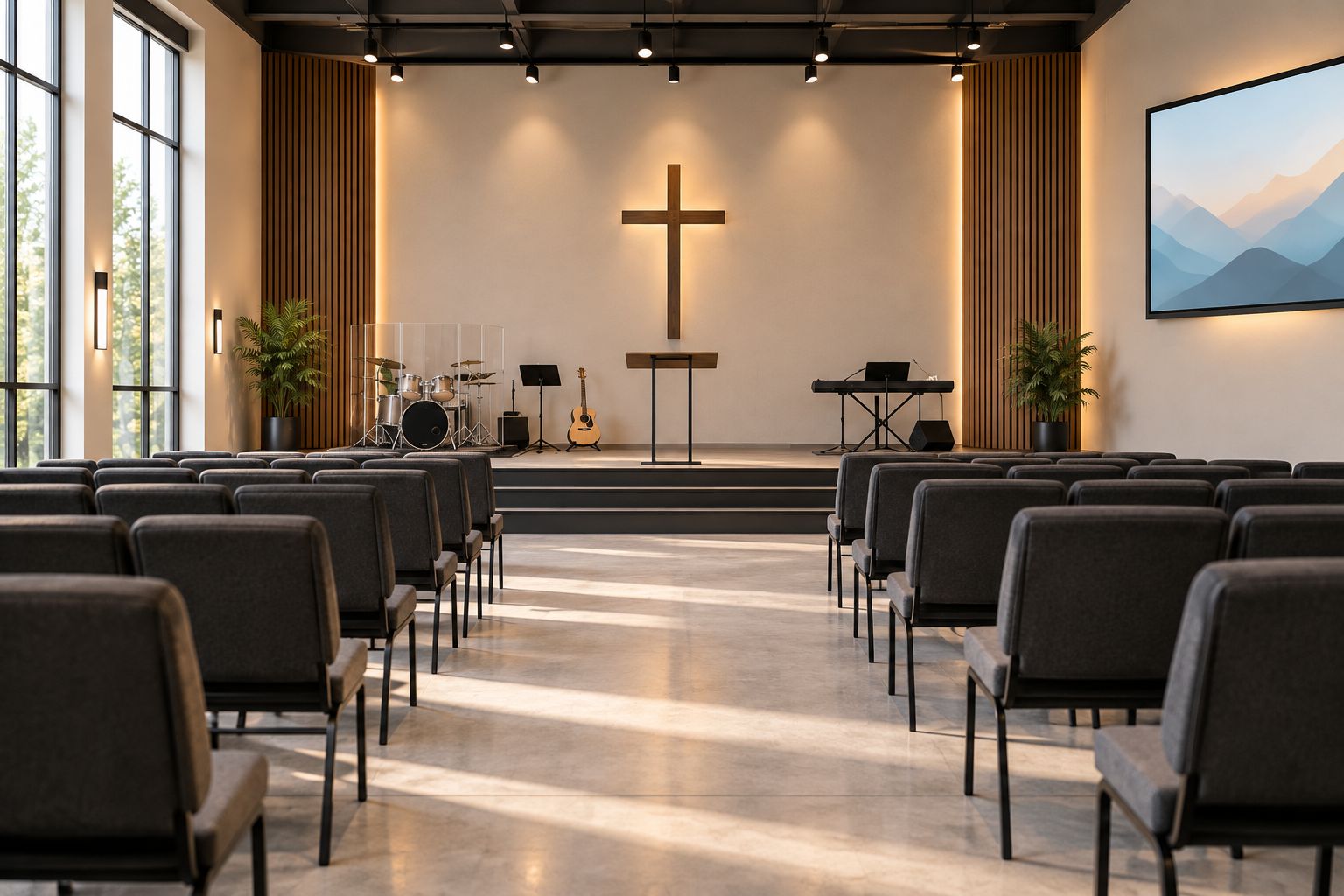
A marked-up drawing is more useful than a finish photograph at this stage. Give the installer the same drawing the worship and facilities teams approved.
- Mark proposed treatment areas on a wall elevation.
- Preserve access to doors, equipment, and building services.
- Check sightlines from side seats and the rear of the room.
- Keep decorative patterns clear of important visual information.
5. Verify fire requirements and mounting details
Gather the paperwork before committing to a large wall installation. For a US worship space, applicable requirements depend on the adopted building code, occupancy, location, and assembly. Ask the local building official or project professional what documentation the project requires.
ASTM E84 addresses surface-burning characteristics; it does not establish an hourly fire-resistance rating for a wall assembly. Review the exact report and its scope rather than accepting a general statement that a panel is safe for commercial use.
The Panel Hub's homeowner-focused description includes installation in under 2 hours and a 5-year warranty. Do not turn that installation statement into a church-project schedule; sanctuary work also involves preparation, access, approvals, and assembly-specific instructions.
- Obtain fire-test documentation relevant to the proposed installation.
- Confirm the specified substrate, adhesive, and mechanical fixings.
- Review warranty terms against the intended application.
- Assign code and installation approval to the responsible professional.
6. Install a sample area before expanding
Begin with a physical sample or a small approved section. Inspect the finish under the room's actual lighting, check how edges meet existing trim, and confirm that the installation method works with the wall condition.
A volunteer team should follow the manufacturer's instructions and work within its skills. Elevated work, electrical conflicts, and uncertain substrates belong with qualified trades. A simple-looking panel does not make every installation a suitable volunteer task.
Schedule work around services and rehearsals, then protect seating and equipment from dust. Keep a record of panel locations and mounting details so later repairs do not depend on someone's memory.
- Approve a sample under daylight and service lighting.
- Confirm edge, corner, and outlet details before repeating the layout.
- Use the specified fixing method on a prepared substrate.
- Photograph completed sections and retain installation documents.
7. Review speech and music after installation
Repeat the listening checks from the same seating positions. Use the same spoken passage and comparable music material so the review addresses the original brief rather than general impressions.
Evaluate the room during use, not only when empty. Occupants affect absorption, and a successful result must serve the congregation as well as the rehearsal team. Record remaining problems before adding more treatment.
For a measured project, ask the acoustics professional to compare the completed room with the agreed targets. Review sound-system settings after the room changes; the previous settings were chosen for a different acoustic environment.
- Revisit the seating positions recorded before installation.
- Check speech clarity during ordinary teaching.
- Compare music balance and congregational singing support.
- Document any remaining issue before approving another treatment phase.
Compare panel options for worship spaces
Choose acoustic evidence for sanctuary performance and decorative character for appearance-only areas. The options below serve different jobs; no single finish answers every church requirement.
| Option | Best for | Main advantage | Key limitation |
|---|---|---|---|
| Acoustic Slat Wood Wall Panels | SoundPanel™ | Buyers assessing wood-finish acoustic treatment | Combines an acoustic product category with a slatted wood appearance | Verify the exact absorption data, fire documentation, and mounting assembly for church use |
| Perforated Acoustic Wood Wall Panels | SoundPanel™ | Buyers considering a perforated acoustic wood finish | Offers a different visual treatment within the acoustic category | Product appearance does not establish room coverage or commercial suitability |
| 3D Geometric Pattern Wooden Panels | GroovePanel® | Decorative entrance or fellowship-area feature walls | Adds geometric relief using real solid wood | Decorative relief is not evidence of acoustic absorption |
| Fabric-faced acoustic treatment | Projects prioritizing an acoustically specified finish | Allows a treatment-led approach to room design | Finish, maintenance, absorption, and fire properties depend on the selected system |
| Painted existing walls | Appearance-only refreshes | Retains the existing wall arrangement | Paint does not provide an acoustic treatment system |
The Panel Hub's acoustic options below are useful for comparing finish directions after you have defined the room requirements. Neither a product card nor a wood finish replaces assembly documentation and project approval.


Common mistakes churches make
- Buying for the platform photograph. A visually successful backdrop does not prove that listeners at the rear hear speech clearly. Approve appearance and acoustic placement separately.
- Treating singing as unwanted noise. A sanctuary serves speech and music. Define both outcomes before adding absorption across large wall areas.
- Using acoustic panels to solve adjoining-room noise. Investigate the doors, partitions, and building services that transmit sound instead of assuming wall-face treatment provides isolation.
- Ordering before checking the assembly. Fire documents, backing, fixings, and substrate conditions belong in the specification, not in a last-minute installation discussion.
- Letting each team choose independently. Facilities, worship, and audio decisions intersect. Use one room brief and one approved layout to prevent conflicting purchases.
FAQ
What’s the best type of wall panel for a church sanctuary?
An acoustically documented panel matched to the sanctuary’s speech and music requirements is the best starting point. Choose the finish after confirming absorption, mounting conditions, and applicable fire requirements.
Will acoustic wall panels stop sound reaching church classrooms?
Acoustic wall panels do not establish sound isolation between a sanctuary and classrooms. Investigate shared walls, doors, ceilings, and ventilation paths when sound transfers between spaces.
Does NRC 0.85 mean a church becomes 85 percent quieter?
No, NRC 0.85 is an absorption rating, not an 85 percent reduction in room loudness. The completed result depends on treatment area, placement, mounting, and the room itself.
Are decorative wood wall panels suitable for worship spaces?
Decorative wood wall panels are an option for appearance-led areas when the installation meets applicable requirements. Do not assign them an acoustic role without supporting performance data.
Should church wall panels go behind the platform or on the rear wall?
Panel placement should follow the room’s reflection problems, not a standard backdrop layout. Assess listening positions and preserve the acoustic support needed for congregational singing.
Can church volunteers install wall panels themselves?
Volunteers should install panels only when the task, access, substrate, and manufacturer’s instructions fit their skills. Use qualified trades for elevated work, electrical conflicts, or uncertain mounting conditions.
What should a church request before ordering wall panels in 2026?
Request the relevant acoustic reports, fire documentation, installation instructions, and warranty terms before ordering. Confirm that those documents cover the exact product and proposed assembly.
One last thing
Do not judge the finished sanctuary only during an empty-room walkthrough. Include an occupied service in your 2026 acceptance plan, because the congregation is part of the acoustic environment. Ask listeners in the previously troublesome seats whether ordinary speech is clearer, then compare that feedback with the original brief.
Related guides