
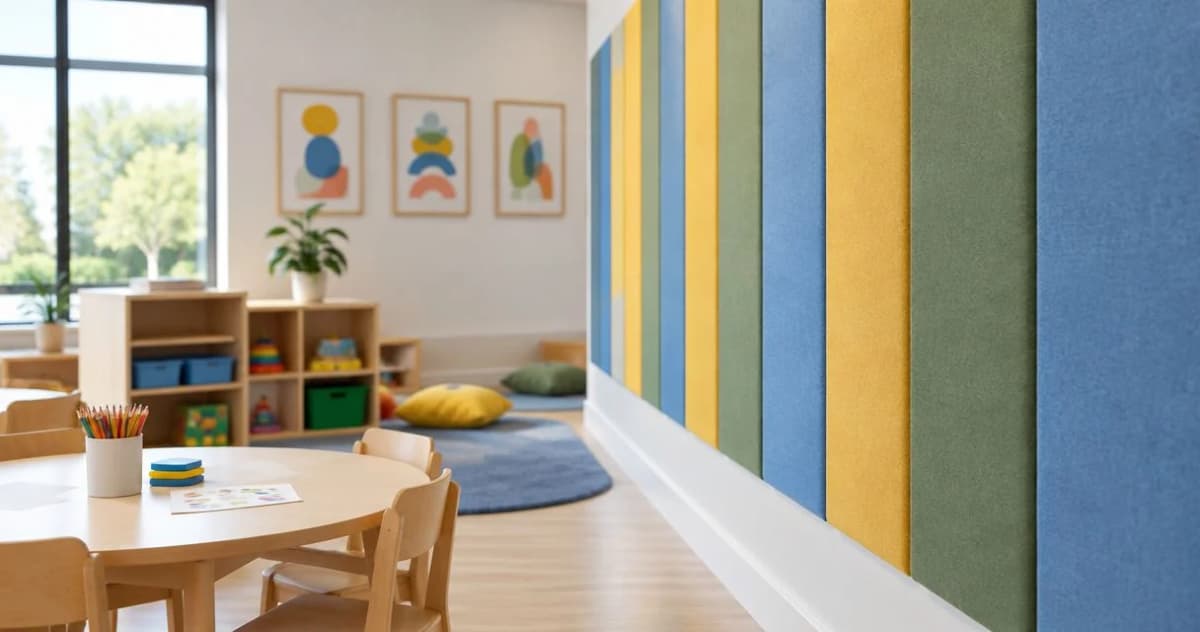
Wall panels for schools are interior wall coverings selected to support learning, manageable cleaning, and comfortable rooms for children and staff. Schools and daycare facilities need more than an attractive finish: the panel, backing, fixings, and maintenance routine must suit the room’s activities and applicable safety requirements.
- Choose wall panels for schools by room function, safety documentation, cleanability, and acoustic needs—not appearance alone.
- The Panel Hub is best for buyers exploring decorative acoustic wall panels before checking project-specific school requirements.
- Acoustic wall panels reduce reflected sound; they do not replace a sound-isolating wall assembly.
- For daycare wall panels, assess reachable edges, secure attachment, cleaning compatibility, and access for repairs.
Why wall panels matter for schools and daycare facilities
A classroom, a nap room, and a corridor need different wall treatments. In a classroom, reflected speech competes with the teacher’s voice; in a daycare activity area, children touch surfaces and spill materials; in a corridor, bags, carts, and furniture contact the walls.
Choose the wall’s job before choosing its finish. A decorative panel is not automatically an acoustic treatment, an impact-resistant surface, or a suitable wet-area lining. Separate those functions in your 2026 project brief so an attractive sample does not become the specification by default.
The Panel Hub sells acoustic and decorative wall panels, including wood, PVC, and shower wall panels. Treat that range as a starting point for material selection, not proof that every option meets school or daycare requirements.
Your purchasing decision also needs to reflect how the building operates. A finish that requires delicate cleaning belongs in a different setting from a wall beside a messy-play station. A panel that is difficult to remove creates a different maintenance burden from a system with accessible, replaceable sections.
How to select and install school wall panels
Define each room’s main problem
Start with a paper floor plan and a walk-through. Ask teaching, custodial, and facilities staff what the wall needs to do, then record the answer beside each proposed installation area. This gives you a useful brief without buying a planning tool.
Avoid writing simply “new wall panels.” Instead, describe the problem: reflected voices during group work, frequent scuffs beside coat storage, or an uninviting reception wall. Each description leads to a different material choice.
For a 2026 refurbishment, distinguish essential performance from decorative preferences. If an acoustic problem drives the project, decide how you will assess the room before discussing wood color or panel patterns. If cleaning drives the project, include the cleaning team from the start.
- Classrooms: prioritize speech clarity and access to teaching displays.
- Daycare activity rooms: assess touch, spills, and routine cleaning.
- Nap rooms: identify noise sources inside and outside the room.
- Corridors: record contact from bags, carts, and furniture.
- Reception areas: separate decorative goals from performance requirements.
Check safety and cleaning documentation
Create a document checklist before requesting samples. Ask for information about the exact panel construction, finish, backing, mounting method, and intended use. Product-family descriptions are not enough when the installed assembly differs from the tested configuration.
Have the person responsible for building compliance review the proposed system against applicable local requirements. Do not assume that a residential installation method, an acoustic rating, or a sustainability certification answers questions about fire performance or suitability in a childcare setting.
Cleaning deserves the same scrutiny. Give the supplier the names of your actual cleaning products and request written compatibility guidance. Inspect a sample for grooves, porous areas, exposed edges, and seams that complicate the work your custodial team already performs.
An easy-to-wipe face does not make every joint, adhesive, and backing suitable for repeated wet cleaning. Check the whole installation, especially around sinks and messy-play areas.
- Request relevant fire-performance documentation for the proposed assembly.
- Ask for emissions information covering panels and installation materials.
- Confirm compatibility with your facility’s cleaning products.
- Review edge finishing and attachment in child-accessible locations.
- Record who approves the system before purchase and installation.
Match the material to the acoustic problem
Use a quiet walk-through first. Listen to speech from normal teaching positions, identify hard reflective surfaces, and distinguish room echo from sound arriving through doors, walls, or building services. These observations help define the problem; they are not a substitute for professional acoustic measurements.
Absorptive wall panels address reflected sound within a room. Sound isolation concerns transmission between spaces. Treating a classroom wall with absorptive panels does not repair a poorly sealed door or redesign a separating wall.
The Panel Hub describes its real wood acoustic wall panels as NRC 0.85 rated. NRC is a sound-absorption rating, not a promised percentage reduction in classroom noise. Request the report for the exact product and mounting arrangement you intend to use.
Acoustic Slat Wood Wall Panels | SoundPanel™ are an option to evaluate when you want a wood-slat appearance alongside acoustic treatment. Best for: buyers assessing decorative acoustic finishes. The limitation is that appearance and product naming do not establish school compliance, cleaning suitability, or the required treatment area.
- Identify whether the problem is room echo or sound transmission.
- Request absorption data for the exact panel and mounting method.
- Include ceilings, furnishings, and existing finishes in the assessment.
- Keep acoustic treatment clear of teaching displays and required equipment.
- Seek acoustic design advice when speech clarity drives the project.
Plan coverage, edges, and attachment
Draw the proposed panel boundaries on the floor plan and mark them on the wall with removable tape. Stand at child and adult viewing heights, check furniture positions, and open nearby doors. A full-height decorative drawing does not reveal every practical conflict.
Separate reachable surfaces from protected surfaces. In daycare rooms, inspect edges and corners where children play, rest, or queue. Avoid layouts that introduce accessible sharp edges, insecure components, or details that tempt climbing.
The supporting wall matters too. Identify its construction and condition before deciding on screws, adhesive, or another mounting method. Follow the panel manufacturer’s instructions and have the installation plan checked for the actual substrate and building use.
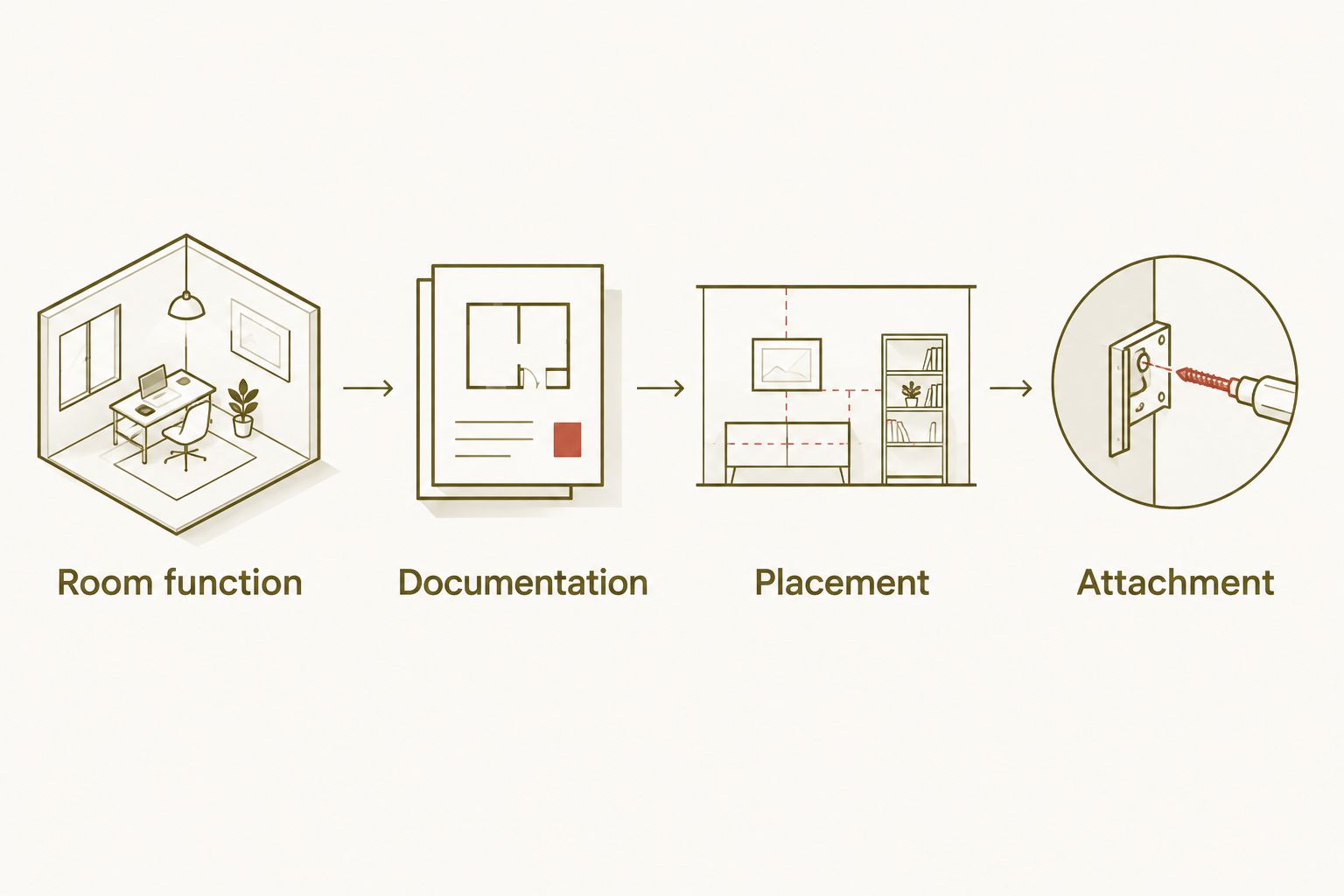
Use a simple approval sequence for your 2026 layout: room function, documentation, placement, then attachment. This keeps the attractive finish from obscuring the decisions that determine whether the installation belongs there.
Do not cover ventilation grilles, alarms, electrical access, inspection points, or other equipment that needs to remain accessible. Resolve these details on the drawing rather than cutting around them during installation.
- Mark panel boundaries and furniture positions before ordering.
- Detail exposed corners, cut edges, and transitions to existing finishes.
- Match fixings to the supporting wall and manufacturer instructions.
- Preserve access to services and required safety equipment.
- Review child-accessible details with the facility’s responsible staff.
Test a sample with the people who maintain it
Begin with a sample rather than a finished feature wall. Review it under the room’s existing lighting, touch its edges, and ask custodial staff to assess the surface using the approved cleaning method. A photograph cannot answer those questions.
For your pilot, choose 1 room and involve 2 staff members with different responsibilities, such as a teacher and a custodian. These are suggested planning steps, not performance benchmarks. Keep the trial small enough to revise before extending the finish across the facility.
If acoustic performance is the goal, document the room conditions before and after the pilot. Keep furniture, occupancy, and activities comparable; otherwise, a quieter day can be mistaken for a better wall treatment. Use a qualified acoustic professional when you need a measurable acceptance result.
A sample also reveals visual clutter. Strong relief patterns can compete with displays and signs, so view the panel beside the materials that will remain in the room.
- Test the approved cleaning method on a sample.
- Inspect edges and seams after handling and cleaning.
- Review appearance beside existing displays and furniture.
- Record staff feedback in the same format before and after installation.
- Approve the pilot before extending the finish to other rooms.
Schedule installation and hand over the maintenance plan
Plan installation around an unoccupied work area. Cutting, drilling, adhesives, and unfinished edges do not belong beside children’s normal activities. Arrange dust control, ventilation, and reopening according to the installation materials and your facility procedures.
Do not base a school schedule on a household installation estimate. The actual job includes surface preparation, service coordination, edge detailing, inspections, and any required adhesive curing. Those tasks determine when the room can return to use.
At handover, photograph the completed installation and record the panel identity, finish, mounting method, cleaning instructions, and repair process. Give facilities staff the documents they will need when a section is damaged or a cleaning product changes.
Inspect 3 locations during the initial handover: exposed edges, seams, and attachment points. Repeat checks according to your facility’s maintenance plan rather than assuming that an attractive finished wall needs no further attention.
- Isolate the work area from occupied classrooms and daycare spaces.
- Follow preparation, ventilation, and curing instructions.
- Check exposed edges, seams, and attachment points before reopening.
- Retain product, installation, and cleaning documentation.
- Assign responsibility for inspections and replacement decisions.
Compare wall-panel options by room function
This 2026 comparison identifies material categories to investigate, not approved institutional specifications. Confirm the exact product’s documentation before treating any option as suitable for your school or daycare facility.
| Option | Best for | Main advantage | Key limitation |
|---|---|---|---|
| Acoustic wood slat panels | Learning spaces where decorative sound absorption is a priority | Combine a wood-slat finish with an acoustic treatment option | Grooves and backing need a cleaning assessment; absorption does not establish sound isolation |
| Decorative solid wood panels | Reception walls and protected decorative areas | Add wood texture and visual interest | Do not assume tested acoustic, impact, or wet-area performance |
| PVC wall panels | Areas where a documented wipe-clean finish is the priority | Offer a panel surface to assess against the cleaning routine | Joints, adhesives, fire performance, and chemical compatibility need separate checks |
| Shower wall panels | Wet-area projects requiring a documented panel system | Provide an option for coordinated wet-area lining | A panel face alone does not resolve joints, penetrations, or substrate requirements |
| Purpose-specified institutional wall protection | Corridors and activity areas with frequent surface contact | Can be selected around a defined wall-protection brief | Protection performance does not automatically provide acoustic absorption |
No material wins every room. Compare the whole installed system against the room brief, including cleaning labor, access for repairs, and the documentation required for approval.
The Panel Hub acoustic wall panels belong on a shortlist when wood appearance and room sound absorption are priorities. Keep that shortlist conditional on the actual installation requirements; neither an acoustic rating nor a decorative finish answers every institutional purchasing question.
Common mistakes schools and daycare facilities make
Treating acoustic absorption as soundproofing
A nap room disturbed by corridor traffic needs an assessment of the transmission path, not an automatic acoustic feature wall. Check doors, openings, and separating construction before buying panels intended to absorb sound inside the room.
Applying one finish across every space
A protected reception wall and a sink-adjacent activity wall have different exposure. Write separate requirements for each area so the easiest purchasing decision does not become the hardest maintenance decision.
Approving a color sample without checking the assembly
The visible finish is only part of the installation. Request documentation covering the relevant backing and mounting arrangement, then confirm that the proposed school installation matches the information being reviewed.
Choosing relief patterns without considering daily cleaning
Slats, grooves, and projecting details require closer inspection than a flat sample photograph suggests. Let custodial staff assess access to recesses and seams before the design is finalized.
Extending a pilot before checking the details
A successful visual result is not the same as an accepted installation. Review attachment, edges, cleaning, access, and the original room objective before repeating the system elsewhere.
FAQ
What are the best wall panels for schools?
The best wall panels for schools match the room’s acoustic, cleaning, safety, and maintenance requirements. Evaluate the exact product and installed assembly rather than choosing by material name alone.
Can wood slat panels make a classroom quieter?
Acoustic wood slat panels can reduce reflected sound when their tested construction and placement suit the room. They do not automatically stop sound traveling through walls or doors.
Are PVC wall panels suitable for daycare facilities?
PVC wall panels need a product-specific suitability review before use in daycare facilities. Check cleaning-product compatibility, joints, fire-performance documentation, attachment, and child-accessible edges.
Does an NRC 0.85 rating mean a room becomes 85 percent quieter?
No, NRC 0.85 is a sound-absorption rating, not a percentage reduction in room noise. Room performance depends on the tested mounting arrangement, treatment area, other surfaces, and noise sources.
Can school staff install decorative wall panels themselves?
School staff should install panels only when the approved system, staff competence, and facility procedures permit it. The work still needs appropriate substrate preparation, attachment, service access, and an unoccupied work area.
What should I request before ordering daycare wall panels?
Request documentation for the exact panel, backing, finish, and installation method. Include relevant fire-performance information, cleaning guidance, emissions information, and details for accessible edges and repairs.
Should every classroom use the same wall panels?
No, classroom wall panels should follow the needs of each room. A shared finish is useful only when the rooms also share the requirements that matter for performance and maintenance.
One last thing
Photograph the wall before it is covered. Keep the images with your 2026 installation records so maintenance staff can see service locations, substrate conditions, and fixing positions without relying on memory. That simple handover detail is useful long after the color decision has been forgotten.
Related guides
- Fire-rated wall panels for commercial spaces
- Wall panels for stairwells and hallways
- Soundproofing wall panels for apartments