
Table of Contents
The Definition
A feature wall — also called an accent wall or statement wall — is a single wall within a room that’s treated differently from the other three, using a different colour, material, texture, or finish to create a deliberate focal point. The term is used interchangeably with “accent wall” in most contexts, though “feature wall” is more commonly used in British and Australian interiors, and “accent wall” in American design.
The purpose is always the same: to give a room a visual anchor, add depth, and create intentional design character in a space that might otherwise feel generic.
Why Feature Walls Work
Rooms without a focal point feel unresolved — the eye doesn’t know where to land and the space lacks a sense of intention. A feature wall solves this by giving the eye a destination. It:
- Creates hierarchy in the room — one wall reads as primary, the others as secondary
- Frames furniture and objects placed in front of it
- Adds depth and dimension without changing the room’s footprint
- Allows a design statement without committing every surface in the room to that aesthetic
Which Wall Should Be the Feature Wall?
Almost always, the feature wall is the one your eye falls on first when entering the room. In practice, this is usually:
- Living room: The wall behind the main sofa, or the wall the TV sits on
- Bedroom: The headboard wall — behind the bed
- Dining room: The wall at the head of the table, or the wall a mirror or artwork hangs on
- Hallway: The wall at the end of the corridor — the one you walk toward
- Home office: The wall behind the desk — the one visible on video calls
Avoid choosing a feature wall that has multiple doors or windows — the interruptions fragment the treatment and reduce its impact.
Feature Wall Materials
The material choice determines both the aesthetic character and the practical performance of the feature wall. Options include:
- Paint: Lowest cost, most reversible, zero texture
- Wallpaper: Pattern and print, no inherent texture
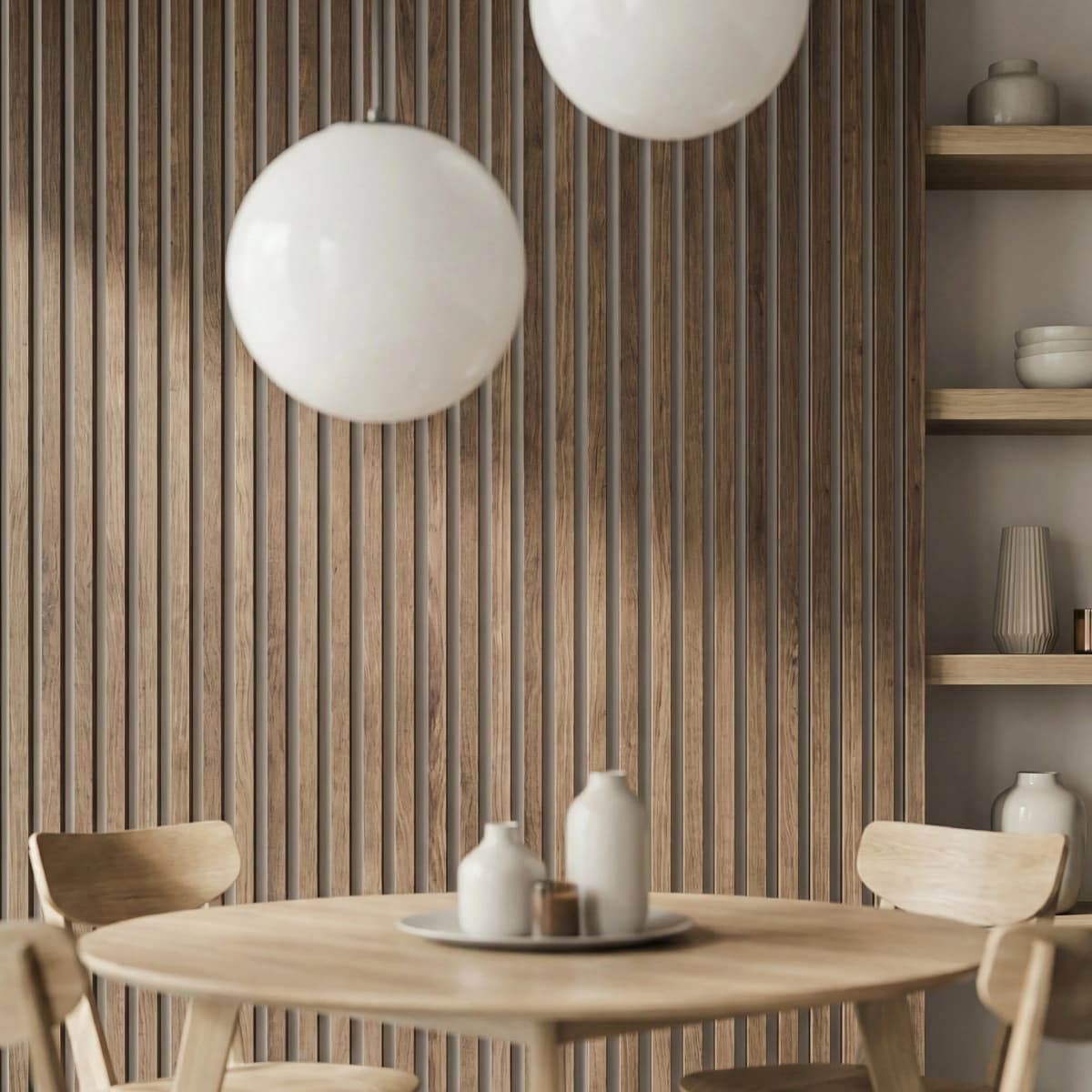
- Wood slat panels: Real texture, warmth, acoustic performance — the highest-impact material option
- Stone or brick effect panels: Weight and character without structural requirements
- Wainscoting and mouldings: Traditional architectural detail
For specific material ideas across different rooms, see our guides on feature wall ideas for living rooms and bedroom accent wall ideas — both cover the full range of options with design guidance.
What Makes a Feature Wall Unsuccessful
Not all feature walls work. Common mistakes:
- Wrong wall choice: Treating a wall that isn’t the natural focal point confuses the room’s hierarchy rather than clarifying it.
- Competing with the furniture: A bold, busy feature wall behind equally bold furniture creates visual noise rather than focus.
- Scale mismatch: A small accent treatment (a narrow panel, a single small artwork cluster) on a large wall looks tentative rather than deliberate. Go floor-to-ceiling or not at all.
- Ignoring the other walls: Feature walls work because of the contrast with adjacent walls. If the other walls are also busy or strongly coloured, the feature wall loses its authority.
The One-Rule Test
Before committing to any feature wall treatment, stand in the doorway of the room. Look at the wall you’re planning to treat. Ask: does this wall already draw my eye, or am I forcing it? If you’re forcing it, reconsider the wall choice. If your eye naturally goes there, you’ve found the right wall. The treatment you choose for it will amplify what’s already there — it won’t create a focal point where one doesn’t exist naturally.
For the full inspiration range, our 15 accent wall ideas guide covers materials, styles, and room types from paint to premium wood panels.
How to Get a Feature Wall Right: Practical Principles
The difference between a feature wall that looks intentional and one that looks like an afterthought comes down to three things: scale, contrast, and restraint.
Scale means the feature treatment should be appropriately sized to the wall. A small framed print on a large wall reads as timid. A bold material — panels, stone cladding, or a full-wall mural — needs to fill enough of the surface to command attention. As a benchmark, the feature element should occupy at least 60–75% of the wall’s total area.
Contrast means the feature wall must visually differ from the surrounding walls. This difference can be material (wood against plaster), tone (dark against light), or texture (three-dimensional surface against flat paint). Without sufficient contrast, the feature wall blends in and the effect is lost.
Restraint means the remaining three walls should recede. Keep them in neutral, non-competing tones and avoid adding competing visual interest. A feature wall only becomes a feature when everything else is calm around it.
On a practical level: always ensure the chosen wall is structurally sound and moisture-free before applying any material. A beautiful panel installation that develops damp patches or adhesive failure within twelve months has cost more than a properly prepared wall.
Feature Wall FAQs
Does every room need a feature wall?
No. Feature walls work best in rooms where a single, clear focal point is beneficial — living rooms, bedrooms, dining rooms, home offices. In busy rooms like kitchens, or rooms with complex layouts and multiple focal points, a feature wall can add to visual noise rather than resolving it.
Is a feature wall the same as a focal point?
A focal point is the element a room is designed around — a fireplace, a large window, a piece of art. A feature wall is a focal point created through surface treatment. All feature walls are focal points, but not all focal points are feature walls.
What is the difference between a feature wall and an accent wall?
The terms are used interchangeably in practice. Some designers use “accent wall” for simple paint treatments and “feature wall” for more involved material or panel installations, but there is no strict industry distinction.
Can feature walls go out of style?
Feature walls in natural materials — wood, stone, tile — have very long design lifespans and do not date quickly. Feature walls in trend-specific colours or novelty finishes can feel dated faster. The more the material is a natural or neutral one, the longer it stays relevant.
Shop Feature Wall Panels
Browse the complete wood wall panel collection at The Panel Hub — including the SoundPanel™ acoustic slat range and GroovePanel® mosaic tiles, the most popular feature wall panel systems. For 50+ real-room feature wall applications showing how panels look in finished interiors across every style, our interior slat wall ideas guide is the most comprehensive reference available. The acoustic panel buyer’s guide explains the performance dimension that sets acoustic panel feature walls apart from purely decorative alternatives.