
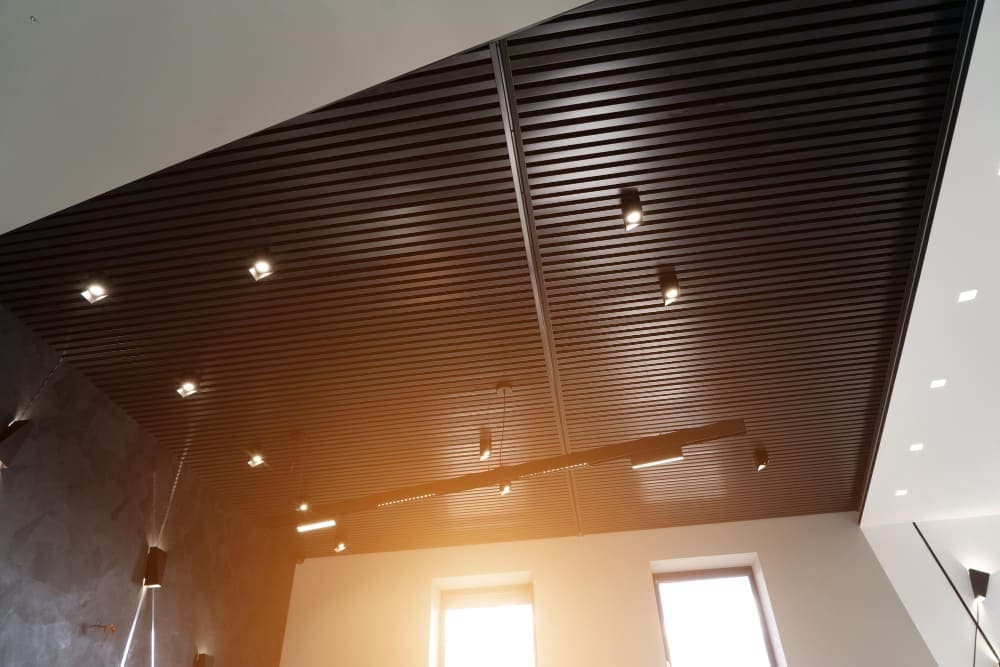
Wood slat panels are most commonly installed on walls — but the ceiling is where they make the most unexpected and dramatic impact. A wood slat ceiling adds warmth overhead in a way paint and plaster never can, wrapping the room in natural texture from above and creating an immersive, hotel-quality interior that visitors notice immediately.
Table of Contents
Why Install Wood Slat Panels on the Ceiling?
- Warmth from above: Ceilings are typically the coldest visual surface in a room — white plaster recedes and reflects. Natural wood overhead immediately changes the character of a space, making it feel enveloping and intimate.
- Acoustic benefit: Ceilings are a primary surface for sound reflection. Acoustic slat panels on a ceiling deliver measurable sound absorption directly at the surface where reverberation most commonly originates.
- Design distinction: Wall panels are increasingly common. A ceiling installation remains relatively unusual — which means a well-executed slat ceiling creates a far stronger impression than the same panels used on a wall.
Best Rooms for a Wood Slat Ceiling
Living Room
A full or partial slat ceiling above a seating area creates a sense of deliberate enclosure that makes the space feel more intimate and designed. Combined with a slat feature wall in the same or complementary tone, a living room slat ceiling creates a genuinely immersive environment. Position LED strips at the ceiling perimeter angled inward for a warm, diffused overhead glow that reveals every slat detail.
Bedroom
A slat ceiling above the bed — aligned with the headboard wall — creates a cocoon-like effect that is deeply calming. The warm overhead texture of real wood works especially well in bedrooms with white or light walls, adding warmth without adding visual complexity at eye level. Golden Oak on the ceiling with white walls below creates a Japandi-inspired, serene atmosphere.
Dining Room
Slat panels on the ceiling directly above the dining table create a natural “room within a room” effect — defining the dining zone in an open-plan space without physical partitions. The acoustic benefit is practically significant too: reducing the echo that makes conversation at dinner uncomfortable at volume.
Home Office
A slat ceiling creates a professional, considered aesthetic that reads well on video calls — the warmth of natural wood overhead changes the quality of ambient light reflected downward. The acoustic absorption also makes the home office more comfortable for long sessions and improves audio on calls.
Bathroom
A partially panelled ceiling above a bath creates a spa-like warmth that tiles and paint simply cannot match. Use panels specifically rated for higher-humidity environments, seal all edges before installation, and ensure adequate ventilation to prevent moisture buildup behind the panels.
Panel Orientation on Ceilings
- Parallel to the longest wall — creates a sense of elongation; the ceiling appears to stretch away from you
- Perpendicular to the longest wall — emphasises width; better in narrow rooms
- Diagonal — creates strong visual dynamism; best used where the diagonal runs toward a focal point (a window, a fireplace, a bed)
Ceiling Installation: Key Differences from Wall Installation
Fixing Method
Adhesive alone is not recommended for ceiling panels. The overhead position creates constant downward peel force — what holds on a wall under shear can fail on a ceiling under tension over time. For ceilings, use panel adhesive for initial positioning combined with screw fixings through the panel surface into ceiling joists. Use a joist finder before beginning and mark all joist positions.
Working Method
Ceiling work requires two people — one to hold and position the panel overhead, one to check level and drive fixings. A prop brace (a length of timber cut to ceiling height, with a padded top) holds panels in position while adhesive sets. Work in small sections and take breaks — overhead work is physically demanding.
Lighting Planning
Plan all lighting before panels go up. Recessed downlights need to be positioned and their fixing points confirmed before panel installation begins — retrofitting light positions through installed panels is difficult and risks surface damage. Mark light positions on the ceiling, cut panel openings to size before installation, and confirm fitting clearances. Our LED Light Strip Kit at the ceiling perimeter is a clean alternative that requires no in-panel cutting at all.
Recommended Panels
American Acoustic Slat Wood Wall Panels | SoundPanel™

Our most popular choice for ceiling installations. The acoustic felt backing delivers sound absorption directly overhead where it makes the biggest difference. The slat profile creates beautiful shadow lines across the ceiling surface as light moves through the day — a dynamic, ever-changing texture that flat materials simply cannot offer.
Read More: Interior Wood Slat Wall Ideas: Inspiration for Every Room
Frequently Asked Questions
Can wall panels be installed on ceilings?
Yes — SoundPanel™ acoustic slat panels are suitable for ceiling installation when fixed correctly. The critical difference is fixing method: ceiling installations must use screw fixings into ceiling joists in addition to panel adhesive. Adhesive alone is not sufficient overhead.
Will a slat ceiling make my room feel lower?
A well-executed installation — especially with panels of 21mm thickness or less — has negligible impact on perceived ceiling height. The warmth of wood overhead typically makes the room feel more intimate and comfortable rather than lower. Lighter tones (Golden Oak, natural) minimise any sense of overhead weight.
How do I find ceiling joists?
Use a stud/joist finder — magnetic or electronic — that detects screws in the plasterboard above or changes in board density at joist positions. Most ceiling joists are spaced at 400mm or 600mm centres. Mark all positions before installation begins.
Conclusion
A wood slat ceiling is one of the most impactful and least expected design moves in interior renovation. It adds warmth, acoustic performance, and genuine design distinction to any room — and it’s achievable as a DIY project with the right preparation and fixing approach.