


In the quest to add character and warmth to interiors, fluted wood panels emerge as a standout choice. Their distinctive grooves and textural depth offer both aesthetic appeal and versatility, making them a favored option for homeowners and designers alike.
This expert guide simplifies the selection process, highlighting key considerations such as the latest trends, durability, and how these elements can enhance the overall look of your home.
Table of Contents
The initial step involves evaluating the aesthetic appeal of various fluted wood panels. These panels bring a unique blend of modernity and timeless elegance to spaces.
Whether aiming for a minimalist design or a more intricate setup, the selection should align with the existing decor. The variety of wood types, from the light hues of oak to the rich tones of walnut, provides ample options to match any design ethos.
Moreover, the depth and spacing of the grooves can significantly impact the room's visual dynamics. Wider grooves create a bold statement, while finer flutes offer a subtle texture. This choice can dramatically influence the ambiance of a space, making it crucial to consider the overall design objective.
Durability is a paramount concern when selecting fluted wood panels. The quality of the wood, along with its treatment, plays a crucial role in how well the panels will withstand the test of time and use. Hardwoods, known for their longevity, are often recommended for areas subject to frequent use or high moisture levels.
Protective finishes also contribute to the panels' durability, offering resistance against scratches, dents, and moisture. Opting for panels treated with high-quality varnishes or sealants ensures they maintain their beauty and structural integrity over time. This consideration is not only practical but also cost-effective in the long run.
Read More: 5 Best Modern PVC Wall Panel Design for Bedroom in 2023
The functionality of the space plays a critical role in the selection process. In high-traffic areas, such as hallways or living rooms, choosing more robust panels can prevent wear and tear. Conversely, in less frequented areas, like bedrooms, one might opt for panels with more delicate features or softer woods.
Additionally, the acoustic properties of fluted wood panels should not be overlooked. Their ability to absorb and diffuse sound makes them an excellent choice for rooms where noise reduction is desired, enhancing the comfort and usability of the space.
Ease of installation and maintenance requirements are also crucial factors. Some fluted wood panels come ready to install with minimal preparation needed, appealing to those looking for a quick update. Others might require professional installation, especially if the walls need significant preparation or if the design is particularly intricate.
Once installed, the maintenance routine should be manageable. Regular dusting and occasional polishing are typically sufficient to keep the panels looking their best. Panels selected for their ease of care ensure that the space remains stunning with minimal effort.
Read More: Mastering the Process: How to Install Shower Wall Panels Like a Pro
Staying abreast of the latest trends in fluted wood panel designs can provide inspiration and insight into what might best suit your space. Currently, there's a shift towards organic materials and textures, with a focus on sustainability and eco-friendliness. Panels made from reclaimed wood or sustainably sourced materials are not only stylish but also align with environmental values.
Moreover, the integration of technology with traditional materials is on the rise. Innovative treatments and finishes that enhance durability and functionality without compromising the wood's natural beauty are becoming more prevalent. These trends reflect a growing desire for designs that are both beautiful and practical.
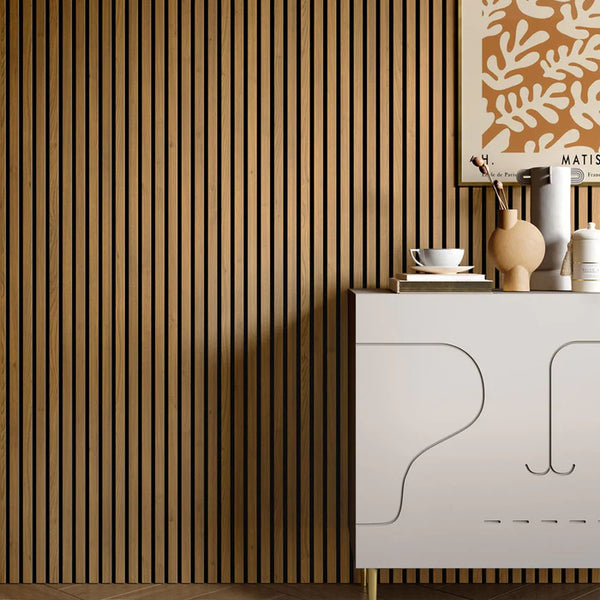
Crafted with precision, each Fluted Wood Panel stands as a testament to high-quality woodwork, featuring distinct textures and grain patterns that highlight the artistry of wood paneling for walls. The elegant fluted design adds a touch of luxury, transforming your dining area with its sophisticated charm and unique character.
Harmonizing effortlessly with diverse interior themes, from the warmth of traditional settings to the sleekness of modern decor, Fluted Wood Panels offer unmatched versatility. This adaptability ensures they are a splendid choice for enhancing not just dining rooms but any space desiring a balance of classic beauty and contemporary flair.
Ideal for environments ranging from the humidity of kitchens to the comfort of dining areas, these panels strike the perfect chord between aesthetic allure and practical utility. Their ability to enrich any room with the refined look and timeless beauty of wood makes Fluted Wood Panels an unparalleled choice for those seeking to elevate their interior design.
Read More: How To Install Wall Panelling In Your Home - 5 Simple Steps
Fluted wood panels have moved from boutique hotel lobbies into mainstream residential interiors over the past several years, driven by a broader interest in architectural surface texture and the growth of biophilic design principles. Understanding why they work so consistently helps inform how to use them effectively.
The shadow-line effect: The defining quality of a fluted surface is how it interacts with light. Natural light from a window, or artificial light from a recessed or directional source, creates shifting shadow lines across the convex ridges as the light angle changes through the day. This quality gives a fluted wall a depth that flat surfaces simply cannot achieve, and it photographs with particular clarity.
Scale and proportion: Fluted profiles are typically available in widths from 15mm to 50mm per ridge. Narrow-pitch fluting in a small room can feel restless — too many parallel lines in a confined space. Wider-pitch fluting reads more calmly and suits smaller rooms better. In large rooms with high ceilings, narrow-pitch fluting creates an appropriate sense of scale.
Joinery applications beyond walls: One distinguishing feature of fluted panels compared to slat panels is their natural suitability for furniture and joinery detailing. Kitchen island cladding, wardrobe door inserts, bath panel fronts, and staircase riser panels all use fluted profiles to add architectural character to freestanding elements. The profile bridges the gap between wall finish and furniture in a way that reads as considered rather than applied.
Painted vs natural timber: Both approaches work for fluted panels. Natural timber finishes emphasise the organic quality of the profile — the grain reads differently across the ridges, adding visual complexity. Painted fluted panels (particularly in white or off-white) create a more classical, architectural quality reminiscent of traditional column reeding. The choice depends on whether you want the material or the form to be the primary quality.
What is the difference between fluted and grooved wood panels?
Fluted panels have a rounded, convex profile between channels — the ridges project outward. Grooved panels (sometimes called channelled panels) have flat recessed channels cut into an otherwise flat surface. Fluted profiles create stronger shadow-line depth than grooved ones due to the curved cross-section of each ridge.
Can fluted wood panels be used as kitchen cabinet doors?
Yes — fluted panel inserts or full fluted cabinet fronts are a recognised kitchen design detail. For kitchen applications, specify panels with a lacquered or hardwearing oil finish appropriate for a high-contact surface. Wipe-clean performance and resistance to kitchen grease and moisture are key considerations for this application.
How are fluted wood panels fixed to a wall?
Fluted wall panels are typically fixed using construction adhesive applied to the panel back in a full serpentine pattern, with optional mechanical fixings (nails or screws) through the backing at top and bottom. Allow 48 hours for full adhesive cure. Most panel weights are compatible with adhesive-only installation on plasterboard substrates.
Are fluted wood panels more expensive than standard slat panels?
Not necessarily. The price difference between fluted and slat profiles from the same manufacturer is usually marginal. The more significant price drivers are material quality (solid hardwood vs. engineered), finish specification (unfinished vs. factory-oiled), and whether acoustic backing is included. Compare products at the same specification level for a meaningful price comparison.
Selecting the perfect fluted wood panels for your space is a journey that combines aesthetics, durability, functionality, and trend awareness. By considering these key aspects, you can transform any room into a visually appealing and comfortable environment.
The right choice not only complements the existing decor but also stands the test of time, providing lasting beauty and value to your home.
In conclusion, fluted wood panels offer a unique opportunity to elevate interior spaces with texture, warmth, and style. Whether you're renovating an old charm or designing a new space, these panels can be tailored to meet your specific design goals.
Armed with the knowledge of what to look for, you're well on your way to creating spaces that are both inviting and impressive, reflecting your personal taste and lifestyle.
Our Wood Panelling Adhesive and Cartridge Caulking Gun are engineered for the high-density of our SoundPanel® and GroovePanel® systems. Both are recommended for permanent installation across our full panel range.


