


Discover how Reeded Wood Panels can revolutionize your interior with timeless makeover tips. These unique elements blend classic charm with modern elegance effortlessly, offering a sophisticated texture and depth that can transform any room.
Whether you're aiming to refresh your living space or add character to a new build, reeded wood panels provide a versatile solution that marries the warmth of wood with contemporary design principles.
Table of Contents
Selecting the appropriate reeded wood panels involves considering the overall aesthetic of your space. Opt for panels that complement your existing decor, whether you're leaning towards a more traditional look or something sleek and modern. Lighter woods can brighten a room and create an airy feel, while darker tones offer richness and depth.
Installation location is key. These panels make stunning accents in living areas, hallways, or bedrooms, adding texture and visual interest. Consider the panel orientation – vertical lines can heighten low ceilings, while horizontal placement can make narrow rooms feel broader.
Read More: 5 Best Modern PVC Wall Panel Design for Bedroom in 2023
Living rooms and open spaces can greatly benefit from the addition of reeded wood wall panels. They serve as an elegant backdrop for art, television, or furniture, adding layers of texture and sophistication. Balance the room by mixing materials and textures – soft furnishings and smooth surfaces complement the tactile nature of reeded panels.
Lighting plays a crucial role in highlighting the unique texture of reeded wood panels. Directional lighting can cast shadows and enhance the three-dimensional effect, making the walls come alive and adding to the ambiance of the space.
Bedrooms become serene retreats with the introduction of reeded wood panels. Use them as a statement headboard or accent wall to add depth and warmth. The natural texture promotes a calming atmosphere, ideal for rest and relaxation.
Coordinate with soft, luxurious fabrics and neutral colors to emphasize the natural beauty of the wood. This contrast between materials brings a sophisticated balance to the bedroom, marrying comfort with elegance.
Kitchens and dining areas get a stylish upgrade with reeded wood panels. Cabinet fronts or islands wrapped in reeded wood introduce a tactile element that is both beautiful and practical. The texture adds interest without overwhelming the space, making it feel contemporary yet timeless.
Pair with sleek hardware and modern appliances to create a harmonious blend of old and new. The contrast enhances the unique character of the reeded panels, making the kitchen or dining area a focal point of the home.
Read More: Mastering the Process: How to Install Shower Wall Panels Like a Pro
Even bathrooms can benefit from the warmth and texture of reeded wood panels. Used as vanity backsplashes or shower accents, they add a luxurious touch that elevates the space. Ensure the panels are properly sealed to withstand the humid environment, maintaining their beauty over time.
Complement with minimalist fixtures and monochrome color schemes to let the wood's texture be the star. This approach creates a spa-like atmosphere that is both relaxing and refined.
First impressions count, and reeded wood panels in entryways set a tone of sophistication and style from the moment you step inside. Create a striking feature wall or clad a console table in reeded wood for a subtle yet impactful statement.
Accentuate with strategic lighting and simple decor to highlight the panel's texture without cluttering the space. This introduction to your home's interior design narrative speaks volumes about your style and attention to detail.
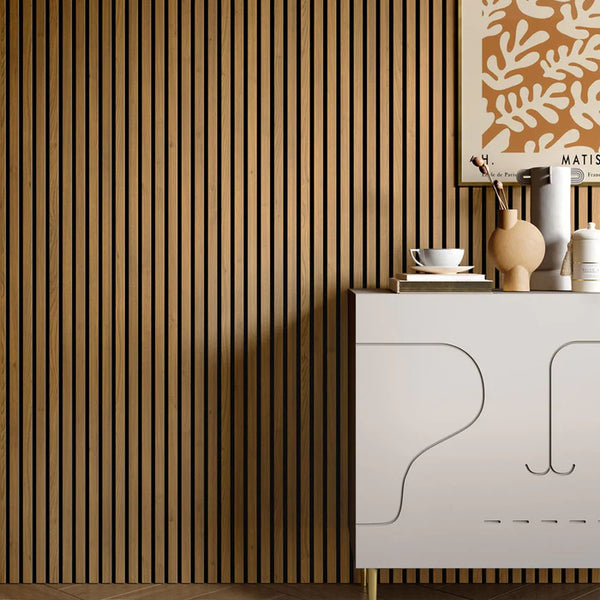
Crafted with precision, each Classic Lines Wall Panel stands as a testament to high-quality craftsmanship, featuring distinct textures and grain patterns that highlight the artistry of wall paneling.
The elegant design adds a touch of luxury, transforming your dining area with its sophisticated charm and unique character.
Harmonizing effortlessly with diverse interior themes, from the warmth of traditional settings to the sleekness of modern decor, Classic Lines Wall Panels offer unmatched versatility.
This adaptability ensures they are a splendid choice for enhancing not just dining rooms but any space desiring a balance of classic beauty and contemporary flair.
Ideal for environments ranging from the humidity of kitchens to the comfort of dining areas, these panels strike the perfect chord between aesthetic allure and practical utility.
Their ability to enrich any room with the refined look and timeless beauty of wood makes Classic Lines Wall Panels an unparalleled choice for those seeking to elevate their interior design.
Read More: How To Install Wall Panelling In Your Home - 5 Simple Steps
Reeded panels work particularly well in combination with other natural materials, but the pairing requires some restraint. The reeded profile already introduces significant visual texture — adding another high-texture material to the same surface competes rather than complements.
Reeded panels with smooth plaster: The most versatile combination. A reeded feature wall against smooth painted plaster on the remaining walls gives the timber profile maximum presence without visual competition. The contrast between the panel's linear texture and the flat plaster surface is precisely what makes both elements read as deliberate choices.
Reeded panels with exposed brick or stone: Can work if the scale of the textures is considered. Fine-pitched reeding alongside coarse stone typically creates a busy result. Wide-pitch reeding (slat width 30mm+) with relatively smooth stone, such as honed limestone, can be balanced. Keep the two textures on separate walls — adjacent surfaces in two high-texture materials rarely resolve well.
Reeded panels with concrete or microcement: A strong contemporary pairing. The warmth of timber reeding against the cool neutrality of concrete or microcement-finished surfaces is a well-established combination in Nordic and Japandi-influenced interiors. This pairing relies on restraint in colour — both materials should be in the same tonal range.
Reeded panels with wallpaper: For rooms where wallpaper is already established, a reeded panel treatment at dado height or on a single feature wall can introduce the timber element without requiring a full wall replacement. Choose a wallpaper pattern that doesn't repeat the linear quality of the reeding — a botanical, abstract, or textural pattern works better than a striped one.
What are reeded wood panels made from?
Reeded wood panels are typically made from solid hardwood, engineered wood, or wood veneer mounted on an MDF or HDF core. The reeded profile is either milled directly into solid timber or applied as a profile strip onto the backing board. Engineered and composite-core panels offer better dimensional stability in environments with humidity variation.
Can reeded wood panels be installed outdoors?
Standard reeded wood panels are designed for interior use and are not rated for external applications. For exterior wall cladding, look for products specifically designed for outdoor use with appropriate wood species (cedar, larch, hardwood) and exterior-grade finishes. Installing interior panels outdoors will result in premature degradation.
How do I remove dust from reeded wood panels?
The convex ridges of reeded panels accumulate dust in the recessed channels between ridges. A soft-bristle brush attachment on a vacuum cleaner removes loose dust effectively. For a more thorough clean, a barely-damp microfibre cloth wiped along the direction of the ridges works well. Avoid cleaning across the ridges — this can dislodge surface finish and leave scratches.
Are reeded wood panels suitable for a fireplace surround?
Reeded panels work well as a fireplace surround treatment when maintained at a safe distance from the fire opening — typically a minimum of 300mm from the edge of the firebox, but always refer to the fireplace manufacturer's specifications. For gas and electric fireplaces with enclosed fronts, reeded panels can be brought closer, but check the rated clearance distances in the appliance documentation.
Reeded wood panels offer a timeless solution for those looking to elevate their interior design. Their versatility and unique texture can transform any room, from the tranquility of a bedroom to the sophistication of a living area.
By selecting the right type of panels and integrating them thoughtfully within your space, you can achieve a harmonious blend of classic elegance and modern flair.
Embrace the warmth and natural beauty of reeded wood wall panels to create spaces that are not only visually appealing but also rich in texture and character.
These tips provide a starting point for incorporating reeded wood into your interior design, ensuring a makeover that is both timeless and distinctive. Let the natural charm of wood take your home to new heights of style and sophistication.
Our Wood Panelling Adhesive and Cartridge Caulking Gun are engineered for the high-density of our SoundPanel® and GroovePanel® systems. Both are recommended for permanent installation across our full panel range.


